1. Definition of Project Management in Media
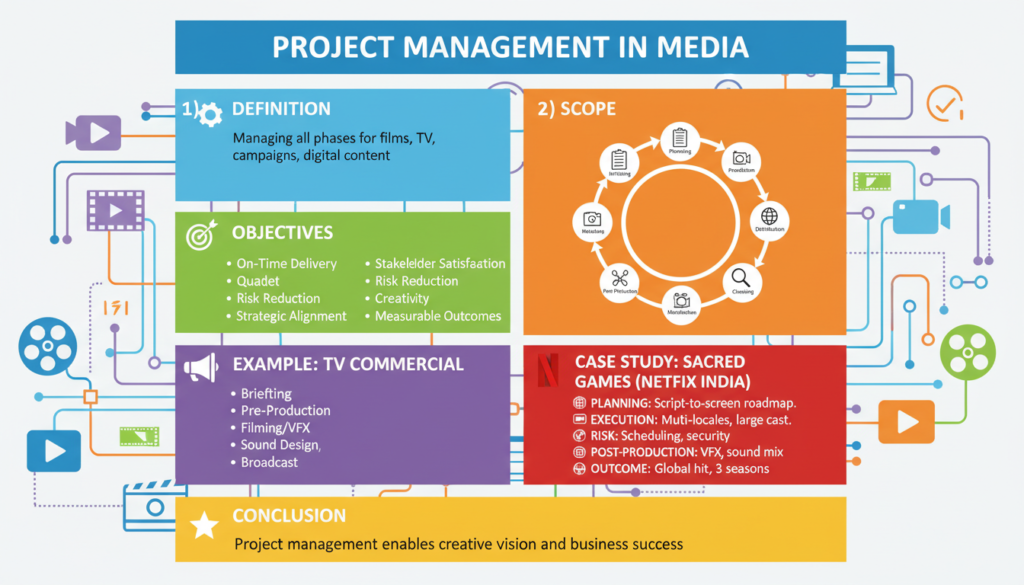
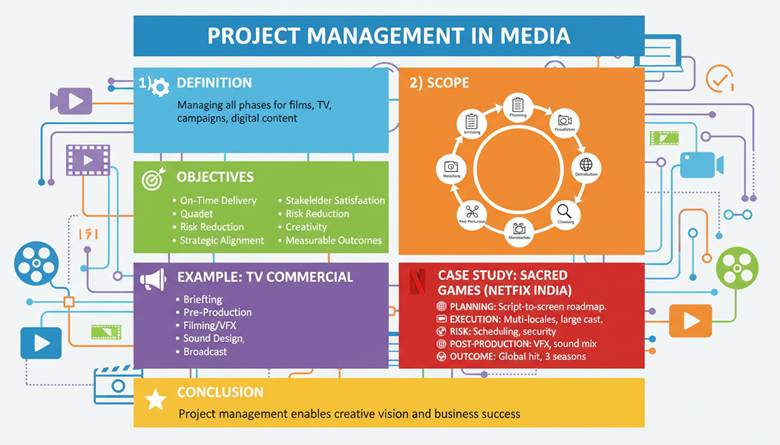
Project management in media refers to the organized application of knowledge, skills, tools, and techniques to execute media-related projects—such as film production, television shows, advertising campaigns, digital content creation, or multimedia events—successfully. It involves managing all aspects of a media project from inception to completion, ensuring that creative vision aligns with business objectives, timelines are met, budgets are respected, and the final output meets the desired quality and stakeholder expectations.
Media projects are unique due to their creative nature, rapid technological changes, multiple stakeholders (directors, producers, clients, agencies, technical teams), and the need for both artistic and logistical expertise. As a result, project management in this field requires a balance between structured methodologies (such as those outlined in PMBOK or Agile) and flexibility to foster creativity and adapt to unforeseen challenges.
2. Scope of Project Management in Media
A. Project Initiation
- Concept Development: Identifying the core idea or message of the media project.
- Stakeholder Identification: Recognizing all parties involved or affected—clients, creative teams, sponsors, and the target audience.
- Project Charter: Defining clear goals, deliverables, timelines, and budget estimates.
B. Pre-Production (Planning)
- Scriptwriting/Storyboarding: Finalizing the narrative or content plan.
- Actors and Resource Allocation: Assembling the project team (directors, writers, designers, actors, and technicians).
- Location Scouting & Permits: Finding and securing locations or studios.
- Budgeting: Creating detailed cost estimates, including contingencies.
- Scheduling: Developing a project timeline (using tools like Gantt charts or production schedules).
- Risk Assessment: Identifying potential risks (weather, legal, technical) and planning mitigations.
C. Production (Execution)
- Daily Operations: Coordinating the shoot or content production, ensuring everyone is on task.
- Logistics: Managing equipment, locations, transportation, and on-set needs.
- Quality Control: Supervising the output to ensure it matches the creative vision.
D. Post-Production
- Editing: Video, audio, and graphic editing.
- Visual Effects (VFX): Adding special effects or animations.
- Sound Design: Composing music, sound mixing, and voiceovers.
- Final Review: Getting approvals from stakeholders.
E. Distribution and Marketing
- Platform Selection: Deciding where the content will be released (cinemas, TV, streaming, social media).
- Promotional Campaigns: Planning and executing marketing strategies.
- Audience Engagement: Monitoring feedback and responding to audience reactions.
F. Monitoring and Controlling
- Progress Tracking: Using KPIs (Key Performance Indicators) and project management software to monitor milestones.
- Budget Control: Tracking expenses and ensuring financial discipline.
- Issue Resolution: Addressing problems as they arise.
G. Closing
- Final Deliverables: Ensuring all outputs are completed and delivered.
- Post-Project Review: Evaluating successes and lessons learned.
- Documentation: Archiving scripts, contracts, and other essential files.
3. Objectives of Project Management in Media
, including on-time delivery, which is essential for meeting project aims. that that that that, including on-time delivery, which is essential for meeting project aims. Project management in media aims to achieve several key objectives: media that achieve project aims, and project management in media is aimed at achieving several key objectives:
A. On-Time Delivery
- Ensuring that all components of the project are completed according to the established schedule. Timely delivery is crucial, especially for media that is time-sensitive (e.g., event coverage, news broadcasts, or seasonal advertising).
B. Budget Adherence
- Managing resources efficiently to prevent cost overruns. Media projects often involve tight budgets and multiple vendors, making financial discipline essential.
C. Quality Assurance
- We maintainmaintainWe maintainmaintainWe maintainmaintainWe maintainMaintaining high standards for creative and technical output. This includes attention to detail in visual, audio, and narrative elements, as well as compliance with industry regulations and client expectations.
D. Stakeholder Satisfaction
- Meeting or exceeding the expectations of all parties involved, from clients and sponsors to creative teams and the target audience.
E. Risk Reduction
- Proactively identifying and mitigating potential risks, such as equipment failure, talent availability, or legal issues.
F. Creative Fulfillment
- Enabling the creative vision to be realized effectively, balancing artistic freedom with practical constraints.
G. Strategic Alignment
- Ensuring the project supports broader business goals, such as brand building, audience engagement, or revenue generation.
H. Measurable Outcomes
- Setting clear, quantifiable goals (such as viewership numbers, engagement rates, or sales targets) and tracking performance against these benchmarks.
4. Example: Television Commercial Production
Let’s consider the production of a television commercial (TVC) for a new soft drink launch:
- Initiation: The client and agency agree on the objective—to introduce the soft drink to urban youth ahead of the summer season.
- scouting, getsPlanning: The project manager schedules casting and location scouting, script approval, and obtains permits for shooting in a city park.
- Production: Over three days, the crew films multiple scenes, overseeing logistics such as catering, weather contingencies, and equipment rental.
- Post-Production: Editors and sound designers finalize the commercial, incorporating client feedback.
- Distribution: The ad is scheduled for prime-time TV slots and shared across social media.
- Monitoring: The project manager tracks reach, engagement, and sales spikes during the campaign.
- Closing: A debrief is held with the client to discuss successes and areas for improvement.
This example demonstrates how project management principles ensure that even a short, creative project like a TVC is delivered on time, on budget, and achieves its marketing objectives.
5. Case Study: Project Management in the Production of “Sacred Games” (Netflix India Series)
Background:
“Sacred Games” was Netflix’s first original Indian series, involving a complex production process with multiple directors, a large cast, and international distribution.
A. Initiation and Planning
- novel, novel, novel. novel. The project began with adapting the script from Vikram Chandra’s novel.The project began with adapting the script from Vikram Chandra’s novel. The project began with adapting the script from Vikram Chandra’s novel.
- Multiple stakeholders were involved: Netflix executives, Indian producers, directors (Anurag Kashyap and Vikramaditya Motwane), and international partners.
- A multi-season roadmap was developed, with clear goals for audience reach, quality standards, and creative integrity.
- Budgeting was elaborate, accounting for high-profile actors, on-location shoots, and advanced post-production needs.
B. Execution
- The series was filmed across different cities, requiring careful scheduling to coordinate actors, locations, and permits.
- A project management team used advanced software (like Movie Magic Scheduling) to track daily progress and resource allocation.
- Communication protocols were set up to keep Netflix’s LA office, Mumbai production teams, and post-production houses aligned.
C. Risk Management
- Risks such as weather disruptions, political sensitivities (due to controversial content), and technical failures were identified.
- The team created contingency plans, such as backup locations and additional post-production time buffers.
D. Post-Production and Distribution
- Editing, VFX, and dubbing were managed across multiple teams, with regular reviews by Netflix and the directors.
- Marketing and release schedules were synchronized internationally.
E. Monitoring and Closing
- The project’s success was measured through viewership metrics, critical reviews, and audience feedback.
- Lessons learned were documented to improve processes for future Netflix India productions.
execution andOutcome:
“Sacred Games” was a critical and commercial success, raising the bar for Indian digital content and setting new standards for production value and storytelling. The project’s success was directly attributable to effective project management—balancing creative ambition with logistical execution, and managing challenges proactively.
6. Conclusion
Project management in media is critical for navigating the unique blend of creativity and complexity that characterizes the industry. By applying structured processes to planning, execution, and evaluation, media project managers enable the realization of ambitious creative visions—on schedule, within budget, and to the satisfaction of all stakeholders. Whether it’s a feature film, a viral digital campaign, or a multi-season streaming series, effective project management transforms ideas into impactful media experiences.