PERSONAL DEVELOPMENT AND EMOTIONAL INTELLIGENCE
I. SELF-MANAGEMENT AND EMOTIONAL REGULATION
1. Introduction
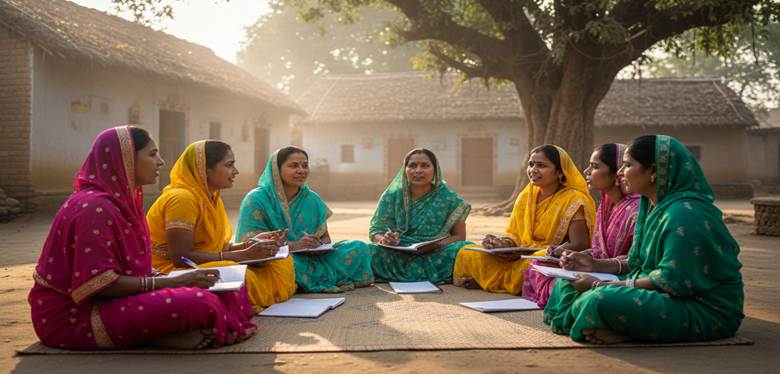
Self-management and emotional regulation are fundamental life skills that play a crucial role in personal growth, social harmony, and professional success. In the context of India—a land with deep philosophical traditions and diverse societal challenges—these concepts acquire unique significance. This note explores the meaning, methods, and importance of self-management and emotional regulation, with detailed Indian examples and case studies, linking ancient wisdom to modern realities.
2. Understanding Self-Management
Definition
Self-management refers to the ability to regulate and control one’s own emotions, thoughts, and actions in different situations. It encompasses self-awareness, self-regulation, motivation, goal-setting, and adaptability, forming the core of emotional intelligence (EI).
Core Components of Self-Management
- Self-Awareness: Recognizing one’s emotions, strengths, and weaknesses.
- Self-Regulation: Managing disruptive emotions and impulses.
- Self-Motivation: Directing energy towards personal and collective goals.
- Goal Setting: Identifying and planning actionable steps for achievement.
- Time Management: Efficiently allocating time among priorities.
- Adaptability: Flexibility in the face of challenges or change.
Importance
- Fosters discipline and resilience.
- Enhances productivity and well-being.
- Builds leadership and decision-making skills.
- Reduces stress and promotes mental health.
3. Emotional Regulation: Concepts and Techniques
Definition
Emotional regulation is the ability to monitor, evaluate, and modulate emotional reactions to achieve goals, complete tasks, or control behavior. It is a subset of self-management and is critical for maintaining healthy relationships, coping with adversity, and making rational decisions.
Common Strategies
- Mindfulness: Being present and aware of thoughts and feelings.
- Cognitive Reappraisal: Changing interpretations to alter emotional responses.
- Problem-Solving: Addressing emotional triggers at their root.
- Relaxation Techniques: Yoga, deep breathing, progressive muscle relaxation.
- Seeking Social Support: Sharing experiences with friends, family, or counselors.
- Expressive Writing: Journaling to process and understand emotions.
4. Indian Philosophical Traditions and Self-Management
India’s rich spiritual and philosophical heritage offers profound insights into self-management and emotional regulation.
A. Bhagavad Gita
- Core Teachings: The Gita emphasizes equanimity (‘samatvam’), detachment (‘vairagya’), and self-control (‘atma-vinigrahah’).
- Example: Arjuna’s dilemma on the battlefield is a classic case study in emotional turmoil. Krishna’s counsel guides him toward self-management through duty (‘dharma’), meditation, and selfless action (‘nishkama karma’).
B. Yoga and Meditation
- Yoga Sutras of Patanjali: Outline methods for controlling the mind, emotions, and senses through practices like asanas (postures), pranayama (breath control), and dhyana (meditation).
- Vipassana Meditation: This ancient Indian technique teaches observation and equanimity towards bodily sensations and emotions, fostering emotional regulation.
C. Gandhian Philosophy
- Self-Discipline (Swaraj): Gandhi advocated for mastery over the self as a prerequisite for societal transformation. He practiced fasting, prayer, and introspection to regulate his emotions and maintain clarity.
- Truth and Non-Violence: These principles demanded strict self-regulation and emotional control, especially during the freedom struggle.
5. Contemporary Indian Practices for Self-Management
A. Yoga and Wellness Programs
- Widespread Adoption: Schools, colleges, and workplaces in India now integrate yoga, meditation, and mindfulness sessions to help students and employees manage stress and emotions.
- Government Initiatives: Programs like the International Day of Yoga and the Fit India Movement promote holistic well-being.
B. Emotional Intelligence Training
- Corporate Sector: Companies like Infosys and Tata Consultancy Services (TCS) offer training in emotional intelligence, time management, and resilience.
- Education Sector: Institutes such as IITs and IIMs include counseling services, peer support groups, and workshops on emotional regulation.
6. Indian Case Studies and Examples
A. Mahatma Gandhi: The Epitome of Self-Management
- Context: Gandhi faced hostility, imprisonment, and personal loss but maintained emotional equilibrium.
- Techniques: Regular prayer, reflective journaling, fasting, and silence (‘maun vrat’) as tools for self-regulation.
- Impact: Translated personal mastery into mass movements based on non-violence and truth.
B. Civil Services: Stress and Emotional Regulation
- Example: Armstrong Pame, IAS officer in Manipur, used community mobilization and meditation to overcome bureaucratic challenges and personal stress while building a 100 km road without government funds.
- Learning: Emotional regulation enabled him to inspire trust, resolve conflicts, and achieve goals.
C. Academic Stress Among Youth
- Scenario: The pressure of competitive exams (IIT-JEE, NEET) leads to anxiety, depression, and sometimes tragic outcomes.
- Intervention: IITs have introduced yoga, mindfulness workshops, and peer counseling. Positive outcomes include reduced stress, better focus, and improved academic performance.
D. Indian Corporate Sector
- Example: Infosys conducts regular wellness programs, including yoga, meditation, and emotional intelligence workshops.
- Result: Employees report lower burnout, higher satisfaction, and better teamwork.
E. The Art of Living Foundation
- Workshops: Offers the ‘Happiness Program’ and ‘Youth Empowerment Seminar’ focusing on breathwork, meditation, and life skills.
- Reach: Millions, especially youth, have benefitted from improved emotional awareness and self-regulation.
7. Challenges Unique to the Indian Context
- Stigma Around Mental Health: Talking about emotions or seeking help is often taboo.
- Academic and Professional Pressure: High parental and societal expectations can cause chronic stress.
- Rapid Urbanization: Migration, lifestyle changes, and isolation impact self-management capacities.
8. Overcoming Challenges: Indian Solutions
- Value-Based Education: CBSE and other boards have begun integrating value education and life skills into curricula.
- Community Support: Traditional joint families, spiritual groups, and NGOs provide informal support systems.
- Government Initiatives: Programs like ‘Ayushman Bharat’ focus on holistic health, including mental well-being.
9. Techniques and Tools for Self-Management and Emotional Regulation
A. Mindfulness and Meditation
- Vipassana: Teaches non-reactivity and awareness of sensations.
- Transcendental Meditation: Popularized by Maharishi Mahesh Yogi, widely practiced for stress management.
B. Yoga and Pranayama
- Asanas: Physical postures that improve body-mind coordination.
- Pranayama: Breath control techniques like Anulom-Vilom and Bhramari for calming the mind.
C. Journaling and Reflective Practice
- Daily Diaries: Encourage self-reflection and tracking emotional responses.
D. Social and Community Support
- Peer Groups: Sharing experiences with friends or mentors.
- Family Systems: Leveraging traditional Indian family structures for emotional support.
E. Professional Counseling
- School and College Counselors: Growing presence in urban India.
- NGO Initiatives: Organizations like Snehi and The Live Love Laugh Foundation work to destigmatize mental health.
10. Indian Case Studies in Detail
1. The Amul Cooperative: Emotional Regulation and Self-Management in Rural India
- Background: The Amul dairy cooperative movement transformed the lives of rural women in Gujarat.
- Challenges: Initial resistance, financial hardship, and gender bias.
- Self-Management Strategies: Collective decision-making, conflict resolution, and resilience built through self-help groups.
- Outcome: Empowerment, improved mental health, and economic independence.
2. IIT Madras Mindfulness Program
- Context: High academic stress, suicide risk.
- Intervention: Mandatory mindfulness and yoga sessions, peer listening circles.
- Result: Significant drop in stress-related incidents, enhanced emotional well-being, and campus cohesion.
3. NIMHANS, Bengaluru: Integrative Therapy
- Program: Combines yoga, ayurveda, and modern psychotherapy for treating stress and emotional disorders.
- Approach: Holistic, patient-centered, drawing from Indian traditions and scientific research.
11. Comparison: Traditional vs. Modern Approaches in India
| Aspect | Traditional Indian Methods | Modern Approaches |
| Emotional Expression | Storytelling, rituals, music | Counseling, group therapy |
| Self-Management | Yoga, meditation, fasting | Apps, time management tools |
| Community Support | Joint family, panchayats | Helplines, online forums |
| Education | Gurukul system, moral stories | Value education, soft skills |
12. Recommendations for Students and Young Professionals
- Practice Mindfulness: Begin with 5-10 minutes of meditation daily.
- Set Realistic Goals: Avoid overburdening yourself; break tasks into manageable steps.
- Seek Support: Don’t hesitate to talk to friends, family, or counselors.
- Adopt Indian Practices: Incorporate yoga, breathing exercises, or traditional music for emotional balance.
- Use Technology Wisely: Apps for journaling, reminders, and guided meditation can help manage time and stress.
13. Conclusion
Self-management and emotional regulation are not just personal skills but also social assets. Indian traditions provide age-old wisdom and practical tools, while modern science offers structured approaches to mastering these capabilities. By learning from Indian thinkers, case studies, and contemporary programs, individuals can cultivate resilience, empathy, and ethical living—qualities essential for thriving in today’s complex world.
______________________________________________________________________________
II. EMOTIONAL INTELLIGENCE (GOLEMAN FRAMEWORK)
1. Introduction
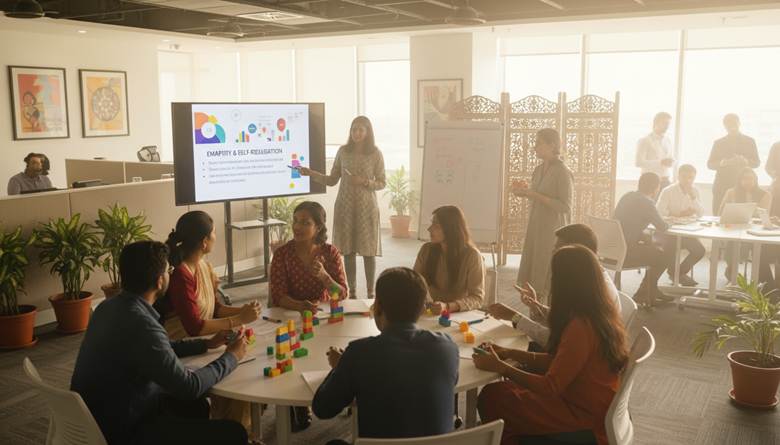
Emotional Intelligence (EI) refers to the ability to recognize, understand, manage, and utilize emotions effectively in ourselves and others. Daniel Goleman, a renowned psychologist, popularized the concept and developed a five-component framework that has become foundational in both personal development and organizational leadership.
2. Goleman’s Five Components of Emotional Intelligence
- Self-Awareness
- Definition: Recognizing and understanding one’s own emotions, strengths, weaknesses, and drives.
- Indian Example: Mahatma Gandhi was highly self-aware, openly reflecting on his limitations and emotional struggles in his autobiography, “My Experiments with Truth.” This self-awareness helped him evolve as a leader.
- Self-Regulation
- Definition: Controlling or redirecting disruptive emotions and adapting to changing circumstances.
- Case Study: Ratan Tata, the former chairman of Tata Group, demonstrated self-regulation during crises (e.g., the 26/11 Mumbai attacks). He managed his emotions and led the organization and its employees through empathetic and calm decision-making.
- Motivation
- Definition: Being driven to achieve for the sake of achievement; passion for work beyond monetary gain.
- Indian Example: Dr. APJ Abdul Kalam, known as the “Missile Man of India,” was intrinsically motivated, often working late into the night for the development of India’s space and missile programs, inspiring countless youth.
- Empathy
- Definition: Understanding and considering other people’s feelings when making decisions.
- Case Study: Mother Teresa epitomized empathy, dedicating her life to caring for the marginalized in Kolkata. Her deep understanding of others’ emotions allowed her to connect and serve effectively.
- Social Skills
- Definition: Managing relationships to move people in desired directions, building networks, and fostering rapport.
- Indian Example: Sundar Pichai (CEO of Google, originally from India) is recognized for his collaborative leadership style, strong communication, and ability to bring diverse teams together, a testament to excellent social skills.
3. Application of Goleman’s EI Framework in India
Educational Sector
- Many Indian schools, such as The Doon School and Delhi Public School, have started including EI training and activities (like value education, peer-group interactions, and mindfulness sessions) to help students develop self-awareness and empathy.
Corporate Sector
- Organizations like Infosys and Wipro offer workshops on EI, focusing on empathy, self-management, and social skills to improve teamwork and leadership.
- These initiatives have resulted in improved employee satisfaction, reduced attrition, and better workplace harmony.
Government and Civil Services
- Indian Administrative Service (IAS) officers are increasingly trained in EI, especially for conflict resolution and public engagement. For example, Armstrong Pame, an IAS officer in Manipur, used empathy and social skills to mobilize communities for developmental work.
4. Challenges and Way Forward in the Indian Context
- Barriers: Social stigma around expressing emotions, a focus on academic over emotional development, and hierarchical workplace cultures can hinder EI growth.
- Solutions: Incorporating EI into educational curricula, promoting open communication in families and organizations, and learning from Indian leaders who exemplified EI.
5. Conclusion
The Goleman Framework of Emotional Intelligence is highly relevant in India’s diverse and dynamic context. By learning from Indian leaders and case studies, individuals and organizations can cultivate EI, leading to better leadership, harmonious relationships, and greater success in all spheres of life.
III. MENTAL HEALTH AWARENESS AND COPING STRATEGIES
1. Introduction
Mental health awareness is the understanding and acknowledgment of mental health issues, their impact, and the importance of timely intervention. In India, due to stigma and lack of information, mental health often remains neglected, making awareness crucial for well-being.

2. The State of Mental Health in India
- According to the National Mental Health Survey (2015-16), nearly 14% of India’s population suffers from some form of mental disorder.
- Barriers include social stigma, misinformation, and limited access to professional care, especially in rural areas.
3. Awareness Initiatives and Progress
- Government Programs: The National Mental Health Programme (NMHP) and initiatives like Ayushman Bharat focus on integrating mental health care into primary health services.
- NGO Efforts: Organizations such as The Live Love Laugh Foundation (founded by Deepika Padukone) and Snehi work to destigmatize mental illness through campaigns, helplines, and workshops.
- Media Campaigns: Celebrities like Deepika Padukone and Virat Kohli have openly discussed their struggles with depression and anxiety, encouraging public dialogue.
4. Coping Strategies: Indian Context
A. Traditional Approaches
- Yoga and Meditation: Widely practiced for mental peace. For instance, Art of Living and Isha Foundation offer programs combining yoga, breathing exercises, and mindfulness.
- Spiritual Practices: Prayer, chanting, and community rituals can provide emotional support and a sense of belonging.
B. Modern Psychological Tools
- Counseling and Therapy: Growing acceptance of psychologists and psychiatrists, especially in urban India. College campuses and workplaces are introducing counseling services.
- Peer Support Groups: Initiatives like YourDOST provide online and offline platforms for sharing and support.
- Helplines: Organizations like Snehi and Vandrevala Foundation run 24×7 helplines for crisis intervention.
5. Case Studies
- Case Study 1: Deepika Padukone
- The actress publicly shared her battle with depression, founded The Live Love Laugh Foundation, and advocated for seeking help without shame. Her openness increased awareness and encouraged many to seek support.
- Case Study 2: IIT Madras
- After a series of student suicides, the institute introduced mandatory wellness workshops, peer counseling, and yoga sessions. This led to improved student well-being and a more supportive campus environment.
- Case Study 3: Rural Outreach
- NIMHANS, Bengaluru, runs outreach programs in Karnataka villages, training community health workers to identify mental health issues and provide basic counseling, bridging rural-urban gaps.
6. Conclusion
Mental health awareness and coping strategies are gaining ground in India, blending traditional wisdom with modern approaches. Continued dialogue, education, and accessible support systems can help overcome stigma and ensure a healthier, more resilient society.
IV. RESILIENCE AND GROWTH MINDSET
Understanding Resilience
Resilience is the psychological strength to cope with stress, adversity, and uncertainty. It enables individuals to overcome setbacks, adapt to change, and emerge stronger. In the Indian context, resilience has historical, cultural, and individual dimensions, shaped by societal challenges, economic hardship, and diverse cultural values.
Growth Mindset: Concepts and Relevance
A growth mindset, a term popularized by psychologist Carol Dweck, is the belief that abilities and intelligence can be developed through dedication, effort, and learning. This mindset contrasts with a fixed mindset, where individuals see talents as static and unchangeable. In India, adopting a growth mindset is critical given the competitive academic environment, rapid socio-economic changes, and the need for continuous personal and professional development.
Key Elements of Resilience and Growth Mindset
- Optimism: Maintaining hope during tough times.
- Adaptability: Adjusting to new environments, methods, or circumstances.
- Learning from Failure: Viewing mistakes as opportunities for growth.
- Perseverance: Persisting in the face of challenges.
- Self-Efficacy: Believing in one’s ability to influence outcomes.
Indian Examples and Case Studies
1. Dr. APJ Abdul Kalam: From Modest Beginnings to Presidency
Dr. APJ Abdul Kalam’s journey from a humble background in Rameswaram to becoming the “Missile Man of India” and the President is a testament to resilience and growth mindset. Despite economic hardships and initial failures (like the failure of the SLV-3 satellite launch), he persevered, learned from setbacks, and inspired millions to pursue scientific and national goals. His autobiography, “Wings of Fire,” documents his philosophy: “We should not give up and we should not allow the problem to defeat us.”
2. The Lijjat Papad Story
In 1959, seven women in Mumbai started making papads (thin, crispy snacks) with a loan of just ₹80. Facing gender bias, lack of resources, and market challenges, they persevered, adapted business models, and learned from failures. Today, Shri Mahila Griha Udyog Lijjat Papad is a women’s cooperative with more than 45,000 members, exemplifying collective resilience and a growth mindset.
3. Indian Start-Ups
Entrepreneurs like Kiran Mazumdar-Shaw (Biocon) and the Flipkart founders (Sachin and Binny Bansal) faced repeated rejections, regulatory hurdles, funding crises, and stiff competition. Their willingness to iterate, pivot, and learn from failures led to global success and showcased India’s start-up spirit.
4. COVID-19 and Student Adaptation
The pandemic forced millions of Indian students to switch to online learning, often with inadequate resources. Initiatives like DigiSakshar in Haryana and community-led digital literacy programs enabled students and teachers to persist and adapt, demonstrating the resilience of India’s youth and educators.
5. Self-Help Groups (SHGs) and Rural Women
In states like Andhra Pradesh and Tamil Nadu, SHGs empowered women to overcome social and economic barriers. By pooling savings, accessing microloans, and supporting each other, they built businesses, improved their families’ welfare, and became agents of social change.
Analysis: What Drives Resilience in India?
- Family and Community Support: Strong bonds often provide a safety net.
- Cultural Narratives: Stories from epics like the Ramayana and Mahabharata emphasize perseverance.
- Religious and Philosophical Beliefs: Teachings from the Bhagavad Gita, Buddhism, and Jainism encourage acceptance, self-discipline, and inner strength.
- Education and Skill-Building: Access to education and skill development programs fosters growth and adaptability.
V. COMMUNICATION & INTERPERSONAL SKILLS
Defining Communication and Interpersonal Skills
Communication skills involve the ability to convey information clearly, listen actively, and adapt messages for diverse audiences. Interpersonal skills encompass relationship-building, empathy, teamwork, conflict resolution, and cultural sensitivity.
These skills are vital in India due to its linguistic diversity, multicultural society, and rapid globalization.
Components of Effective Communication
- Verbal Communication: Language, tone, clarity, and persuasion.
- Non-Verbal Communication: Body language, facial expressions, gestures.
- Listening Skills: Active, empathetic listening; understanding implicit messages.
- Feedback: Giving and receiving constructive criticism.
- Cross-Cultural Competence: Navigating differences in language, customs, and etiquette.
Indian Examples and Case Studies
1. Mahatma Gandhi: Communication as a Leadership Tool
Gandhi’s mastery in communication played a pivotal role in India’s freedom struggle. He conveyed complex ideas—non-violence, truth, and self-reliance—in simple, relatable terms. His speeches, letters, and public dialogues united diverse communities. His empathetic listening during meetings with peasants (Champaran Satyagraha) and political adversaries facilitated conflict resolution.
2. Sundar Pichai: Cross-Cultural Communication
Hailing from Chennai, Sundar Pichai rose to become the CEO of Google and Alphabet. His ability to communicate complex ideas simply, listen to diverse perspectives, and build rapport with global teams is widely praised. He often credits his Indian upbringing for teaching him humility and adaptability.
3. Anna Hazare’s Anti-Corruption Movement
In 2011, Anna Hazare’s clear, persuasive communication ignited a nationwide movement against corruption. Through public rallies, media appearances, and effective use of social media, he mobilized millions, transcending age, class, and geography. His interpersonal skills enabled him to build coalitions among activists, politicians, and citizens.
4. Infosys & TCS: Soft Skills Training
Indian IT giants like Infosys and TCS invest heavily in training employees in communication and interpersonal skills. Cross-functional teams, international client interactions, and leadership roles require fluency in English, cultural sensitivity, and strong collaboration skills. Soft skills modules cover everything from email etiquette to negotiation and conflict management.
5. Healthcare Communication: Narayana Health
Founded by Dr. Devi Shetty, Narayana Health emphasizes doctor-patient communication as a core value. Doctors are trained to explain diagnoses and treatment plans in regional languages, show empathy, and consider patients’ emotional needs, improving health outcomes and trust.
Challenges and Opportunities
- Linguistic Diversity: India’s 22 official languages and hundreds of dialects pose both a challenge and an opportunity for multilingualism and cultural sensitivity.
- Hierarchical Structures: Traditional respect for authority can sometimes inhibit open communication; modern workplaces strive for flatter hierarchies and open dialogue.
- Digital Communication: Social media and digital platforms have transformed how Indians communicate, enabling new forms of engagement but also presenting challenges like online harassment and misinformation.
Interpersonal Skills in Indian Society
- Joint Family Systems: Teach negotiation, conflict resolution, and empathy from a young age.
- Community Events and Festivals: Foster teamwork, collaboration, and relationship-building.
- Educational Reforms: Increasing emphasis on group projects, debates, and extracurricular activities to nurture soft skills.

VI. DECISION-MAKING AND BASICS OF FINANCIAL LITERACY
Decision-Making: Definition and Process
Decision-making is the cognitive process of selecting a course of action from multiple alternatives. It involves identifying options, evaluating risks and benefits, considering short- and long-term consequences, and implementing chosen solutions.
Steps in Effective Decision-Making
- Identify the Problem/Goal
- Gather Information
- Generate Alternatives
- Evaluate Options
- Make the Decision
- Implement the Solution
- Review and Reflect
Financial Literacy: Importance and Key Concepts
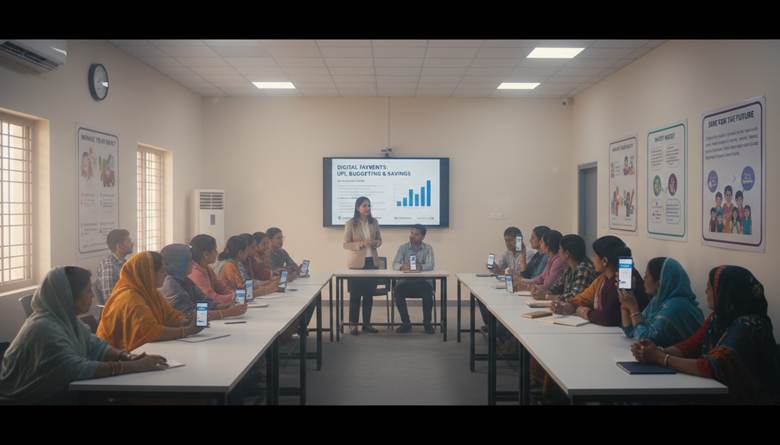
Financial literacy is the ability to understand and use various financial skills, including personal budgeting, investing, borrowing, and managing money. In India, financial literacy is crucial due to rapid economic changes, digital banking expansion, and the government’s push for financial inclusion.
Core Elements of Financial Literacy
- Budgeting: Managing income and expenses.
- Saving & Investing: Understanding savings accounts, fixed deposits, mutual funds, and stocks.
- Credit & Loans: Awareness of interest rates, EMIs, credit scores.
- Insurance: Knowledge of life, health, and property insurance.
- Digital Finance: Using online banking, UPI, and mobile wallets.
Indian Examples and Case Studies
1. Mumbai Dabbawalas: Decision-Making in Logistics
The Mumbai Dabbawala network delivers over 200,000 lunchboxes daily with near-perfect accuracy. Their system relies on decentralized, rapid decision-making, effective communication, and trust. When disruptions occur (strikes, heavy rain), Dabbawalas collaborate and adapt on the spot, demonstrating real-world decision-making under pressure.
2. Financial Inclusion: Pradhan Mantri Jan Dhan Yojana (PMJDY)
Launched in 2014, the PMJDY aimed to bring every Indian household into the banking system. By opening millions of zero-balance accounts, offering RuPay debit cards, and facilitating direct benefits transfers (DBT), the program empowered individuals to make informed financial decisions. Financial literacy camps were organized nationwide, teaching basics like saving, digital payments, and avoiding fraud.
3. Rural Women and Microfinance
Self-Help Groups (SHGs) empower women by teaching them to manage collective savings and access microloans. For example, in Andhra Pradesh, SHGs have enabled women to start small businesses, make group decisions about loans, and plan investments, increasing household income and resilience.
4. Student Financial Literacy Initiatives
The National Centre for Financial Education (NCFE) runs programs in schools and colleges, teaching students about budgeting, saving, and investing. Delhi government schools’ “Financial Literacy Clubs” use real-life simulations to teach students about money management, encouraging responsible decision-making from a young age.
5. Agricultural Decision-Making
Farmers in states like Punjab and Maharashtra use weather apps, market price information, and government advisories to decide what crops to plant and when to sell. Organizations like e-Choupal provide digital platforms for market intelligence, improving rural incomes.
Challenges in Financial Literacy
- Low Awareness: Many Indians, especially in rural areas, lack basic financial knowledge.
- Digital Divide: Limited access to smartphones and the internet in some regions.
- Fraud and Misinformation: Rise in digital transactions has also seen an increase in scams.
Policy and Community Solutions
- Bank-Led Financial Literacy Centers: RBI and banks organize workshops on banking, loans, and digital payments.
- Women’s Collectives: SHGs serve as informal schools for financial skills.
- Digital Literacy Drives: Government and private sector collaborate to teach digital finance.
VII. EXPLORING ETHICAL BEHAVIOR AND INTEGRITY
Definition and Importance
Ethical behavior means acting according to accepted principles of right and wrong. Integrity is the quality of being honest and adhering steadfastly to moral and ethical principles, even when it is difficult or unpopular. In the Indian context, ethics and integrity are essential for social harmony, governance, business, and national progress.

Principles of Ethical Behavior
- Honesty: Telling the truth, being transparent.
- Fairness: Treating everyone equally.
- Accountability: Owning up to one’s actions.
- Respect: Valuing others’ rights and dignity.
- Responsibility: Acting with care for others and society.
Indian Examples and Case Studies
1. Satyendra Dubey: Standing Up to Corruption
Dubey, an IIT Kanpur graduate and Indian Engineering Services officer, exposed corruption in highway construction projects. Despite personal risk, he reported malpractices to the highest authorities. Tragically, he was murdered for his integrity, but the incident galvanized public demand for whistleblower protection and ethical reform in government.
2. E. Sreedharan: The Metro Man
Sreedharan led projects like the Konkan Railway and Delhi Metro with impeccable ethical standards. He enforced transparent tendering, zero-tolerance for bribery, and strict adherence to deadlines. His leadership made these complex projects models of efficiency and integrity.
3. TATA Group: Corporate Ethics
Known for its commitment to ethical business, the TATA Group has repeatedly put values above profits. During the 26/11 Mumbai attacks, the group supported victims and employees generously, earning public admiration. Its “Code of Conduct” sets standards for transparency, fairness, and social responsibility.
4. Anna Hazare and the India Against Corruption Movement
Hazare’s campaign for the Lokpal (anti-corruption ombudsman) was rooted in ethical governance and public accountability. His personal integrity and Gandhian lifestyle inspired millions to demand cleaner politics and policy reforms.
5. Academic Integrity in Indian Education
Institutions like IITs and IIMs maintain strict codes against plagiarism and cheating. Students participate in workshops on academic ethics and sign honor pledges, fostering a culture of fairness and respect in learning.
Historical and Cultural Foundations
- Gandhian Values: Mahatma Gandhi’s life and teachings emphasized truth (satya) and non-violence (ahimsa), influencing generations of Indian leaders and reformers.
- Ancient Texts: The Bhagavad Gita, Upanishads, and Arthashastra discuss ethics in personal, social, and political life.
- Community Vigilance: Panchayat systems and neighborhood watch groups historically upheld social justice and ethical conduct.
Contemporary Ethical Challenges in India
- Corruption in Public Life: Scandals undermine trust in institutions.
- Corporate Malpractice: Cases of fraud, tax evasion, and environmental harm.
- Educational Dishonesty: Cheating in exams, fake degrees.
- Everyday Ethics: Bribery in daily transactions, disregard for rules.
Building Ethical Behavior and Integrity
1. Value-Based Education
The Central Board of Secondary Education (CBSE) and many state boards have introduced value education curricula focusing on honesty, empathy, and civic responsibility.
2. Ethical Leadership in Government and Business
Mandatory ethics training for public officials and corporate leaders is gaining traction. Organizations like the Confederation of Indian Industry (CII) promote best practices in business ethics.
3. Whistleblower Protection and Transparency Laws
The Whistle Blowers Protection Act and the Right to Information (RTI) Act encourage ethical reporting and transparency.
4. Role Models and Mentoring
Public recognition of ethical leaders—like Dr. Verghese Kurien (Father of the White Revolution), Justice V.R. Krishna Iyer, and Aruna Roy (RTI activist)—inspires the next generation.
Case Study: Aruna Roy and the RTI Movement
Aruna Roy, a former IAS officer, led the grassroots movement for the Right to Information, which empowered citizens to demand government transparency. Her leadership, rooted in ethics and public service, led to one of India’s most significant democratic reforms.
Conclusion
The integration of resilience, growth mindset, communication, decision-making, financial literacy, ethical behavior, and integrity is vital for individual and societal progress in India. Drawing from a deep well of cultural traditions, modern policies, and inspiring examples, Indians continue to navigate complex challenges with creativity and moral courage.
Key Messages:
- Resilience and growth mindset enable Indians to thrive despite adversity—from national leaders to rural entrepreneurs.
- Communication and interpersonal skills are essential in a multilingual, multicultural society and the global workplace.
- Decision-making and financial literacy empower individuals to make informed life choices and build economic security.
- Ethical behavior and integrity underpin trust, justice, and sustainable development.
To foster these skills, India must continue to invest in education, reform institutions, celebrate ethical role models, and build supportive communities, ensuring that every citizen is equipped to contribute to a just and prosperous society.