Introduction
The digital revolution has fundamentally reshaped the way we communicate, interact, and express ourselves. Today, billions of people around the globe engage on platforms like Facebook, Twitter, Instagram, and WhatsApp, blurring the boundaries between public and private life. While the digital era offers unprecedented opportunities for connection and knowledge-sharing, it also raises critical questions about values, ethics, and responsible use.
This essay explores the core values that should guide behavior in digital spaces, focusing on social media ethics, the concept of the digital footprint, and the implications of online behavior. Through real-life examples and case studies (with a strong emphasis on India), we analyze both the opportunities and challenges posed by our networked world.
1. The Importance of Values in the Digital Age
Values are the guiding principles or standards of behavior that help us distinguish right from wrong, desirable from undesirable. In the digital era, traditional values—such as honesty, respect, empathy, and responsibility—take on new meanings and significance.
Why Do Values Matter Online?
- Anonymity and Scale: The internet’s anonymity can weaken social restraints, making it easier to act unethically.
- Permanence: Digital actions can have lasting consequences, as data is often permanent.
- Speed and Reach: Information (both true and false) can spread worldwide in seconds, amplifying both positive and negative impacts.
- Diversity: The global nature of digital spaces brings together people with different cultures and value systems, requiring sensitivity and mutual respect.
2. Social Media Ethics
Social media ethics refer to the moral principles that guide behavior on platforms like Facebook, WhatsApp, Twitter, and Instagram. Ethical use of social media is vital for building trust, preventing harm, and fostering a respectful online environment.
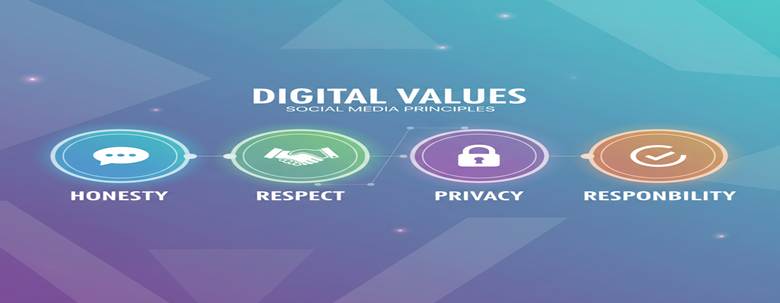
A. Key Ethical Principles for Social Media Use
- Authenticity and Honesty:
- Posting true, accurate information; avoiding fake news and misinformation.
- Respect and Empathy:
- Engaging politely, avoiding harassment, trolling, or hate speech.
- Privacy and Consent:
- Respecting others’ privacy; not sharing personal information or images without permission.
- Responsibility and Accountability:
- Owning up to mistakes and correcting them; understanding the impact of one’s words and actions.
- Fairness and Non-discrimination:
- Avoiding bias, promoting inclusivity, and respecting diversity.
B. Examples of Social Media Ethics in Practice
Example 1: Fact-Checking Before Sharing
A user receives a WhatsApp message claiming a new government scheme is giving free laptops. Before forwarding, they check the official website and find it’s a hoax. By not spreading the message, they practice honesty and responsibility.
Example 2: Respecting Privacy in Group Photos
At a college event, a student asks everyone’s permission before posting group photos on Instagram, respecting both privacy and consent.
C. Indian Case Study: The #MeToo Movement
In 2018, the #MeToo movement gained momentum in India, with women using social media to share personal experiences of harassment. This empowered many to speak up, but also highlighted ethical dilemmas—such as the need to verify allegations, avoid naming and shaming without evidence, and respect both survivors’ and accused individuals’ rights.
Analysis:
- Positive Impact: Raised awareness, gave voice to the marginalized, and forced institutions to act.
- Ethical Challenges: Balancing freedom of expression with fairness, avoiding trial by media, and ensuring privacy.
D. Indian Case Study: Social Media Misinformation and Mob Violence
Background:
India has witnessed several incidents where fake news on WhatsApp led to mob violence. For example, in 2018, rumors of child kidnapping circulated widely, resulting in lynchings in Maharashtra and other states.
Analysis:
- Ethical Failure: Lack of fact-checking, spreading panic, and endangering innocent lives.
- Response: WhatsApp limited message forwarding, added labels for forwarded messages, and partnered with fact-checking organizations.
3. Digital Footprint
A digital footprint is the trail of data each person leaves online—through social media posts, website visits, online purchases, emails, and more. This footprint can be active (content intentionally shared) or passive (data collected without explicit consent).
A. Types of Digital Footprints
- Active Footprint: Posts, comments, likes, tweets, blog entries, uploaded photos.
- Passive Footprint: Browsing history, cookies, location data, app usage statistics.
B. Why Is Digital Footprint Important?
- Permanence: Digital content can be difficult or impossible to erase.
- Reputation: Employers, universities, and others may search digital footprints before making decisions.
- Privacy Risks: Personal data can be misused for identity theft, targeted ads, or surveillance.
C. Examples of Digital Footprint Management
Example 1: College Admissions
Many universities, in India and abroad, check applicants’ social media profiles. Inappropriate posts or offensive content can lead to rejection.
Example 2: Job Recruitment
Indian IT companies often conduct background checks, including reviewing LinkedIn, Facebook, and Twitter profiles. A candidate found posting hate speech or confidential company information may lose job opportunities.
Example 3: Political Campaigns
Politicians across the globe, including in India, have lost public trust due to the exposure of past tweets or posts containing controversial views or misinformation.
D. Indian Case Study: Aarogya Setu App and Data Privacy
During the COVID-19 pandemic, the Indian government launched the Aarogya Setu app to aid in contact tracing. While widely adopted, there were concerns about:
- Data collection and how long information would be stored.
- Potential surveillance of citizens.
- Transparency about data usage.
Analysis:
This highlighted the importance of privacy, informed consent, and the need for clear data protection policies in the digital era.
4. Online Behavior
Online behavior encompasses all actions taken in digital spaces, including what we post, how we interact, and the tone we use. It is shaped by individual values, social norms, platform rules, and sometimes, the belief that “it’s just the internet.”
A. Positive Online Behaviors
- Constructive Participation: Sharing knowledge, supporting others, positive engagement.
- Digital Citizenship: Reporting abuse, standing up against cyberbullying, respecting platform guidelines.
- Critical Thinking: Evaluating information before accepting or sharing it.
B. Negative Online Behaviors
- Cyberbullying: Harassment, threats, or shaming others online.
- Trolling: Deliberately provoking or upsetting people for amusement.
- Hate Speech and Misinformation: Spreading falsehoods or inciting hatred.
C. Examples and Indian Context
Example 1: Cyberbullying
A study by Microsoft found that Indian teenagers face high rates of cyberbullying. Victims report anxiety, depression, and reluctance to use digital platforms.
Example 2: Online Activism
The “Save Aarey Forest” movement in Mumbai used Twitter and Facebook to mobilize public opinion and protest tree felling for metro construction. This positive online behavior led to increased public awareness and policy reconsideration.
D. Indian Case Study: “Digital India” and E-Governance
Background:
The Government of India’s “Digital India” initiative promotes digital literacy and access. However, with increased online participation comes the need for responsible online behavior.
Example:
E-governance platforms like the UMANG app allow citizens to access government services, but some users have abused these by posting fake grievances or using abusive language toward officials.
Analysis:
To maximize the benefits of digital governance, citizens need to follow ethical conduct, provide accurate information, and interact respectfully.
5. Challenges to Upholding Values in the Digital Era
A. Anonymity and Lack of Accountability
Many platforms allow users to hide their real identities, reducing fear of consequences for unethical actions.
Example:
Fake social media accounts are often used to spread rumors or harass others, making it hard to hold perpetrators accountable.
B. Information Overload and Misinformation
The sheer volume of online content makes it difficult to distinguish truth from falsehood.
Example:
During the COVID-19 pandemic, social media was flooded with unverified remedies, leading to confusion and, in some cases, harm.
C. Cultural and Generational Gaps
Older generations may struggle to adapt to digital norms, while youth may not fully grasp the consequences of online actions.
Example:
Elders falling victim to phishing scams due to lack of digital literacy.
D. Commercialization and Surveillance
Data is a valuable commodity. Companies often push ethical boundaries to collect, analyze, and monetize user information. Governments may also engage in surveillance.
Example:
Controversies over Facebook and Cambridge Analytica, where user data was harvested for political campaigns without informed consent.
6. Building Ethical Digital Citizens: Solutions and Recommendations
A. Digital Literacy and Education
- Incorporate digital ethics into school curricula:
Teach students about privacy, cyberbullying, misinformation, and respectful online conduct. - Workshops and awareness campaigns:
NGOs like Cyber Peace Foundation run digital literacy programs across Indian schools and colleges.
B. Stronger Regulations and Platform Accountability
- Data protection laws:
The Indian government has proposed a Personal Data Protection Bill to safeguard citizens’ data rights. - Platform moderation:
Social media companies must invest in better monitoring and prompt removal of harmful content.
C. Parental Guidance and Community Support
- Open family discussions:
Parents should talk to children about online risks and values. - Community workshops:
Local organizations can provide resources and support for digital well-being.
D. Role of Individual Responsibility
- Think before you post:
Remember the permanence and potential impact of online actions. - Practice empathy:
Treat others online with the same respect as face-to-face. - Fact-check:
Don’t share information unless you are sure it is accurate.
E. Encouraging Positive Online Movements
- Promote social good:
Use digital platforms for awareness campaigns, volunteerism, and positive social change.
Example:
The “Plasma Donor” movement during COVID-19 in India, where WhatsApp groups and Twitter hashtags connected patients with plasma donors.
7. Case Studies: Values in Action
Case Study 1: The Power and Peril of Viral Campaigns – “Jago Grahak Jago”
Background:
The Indian government’s “Jago Grahak Jago” campaign uses digital media to educate citizens about consumer rights. Viral videos, memes, and social media posts have empowered millions to demand fair treatment and avoid scams.
Impact:
Raised awareness and promoted values of honesty and fairness. However, at times, misinformation about consumer rights also spread under the same hashtag, illustrating the double-edged nature of digital virality.
Case Study 2: Social Media, Elections, and Democracy
Context:
During the 2019 Indian general elections, social media played a central role in campaigning, mobilizing voters, and spreading information.
Issues:
- Positive: Enabled increased youth participation, transparency, and real-time engagement.
- Negative: Fake news, hate speech, and deepfakes threatened the integrity of the electoral process.
Response:
Election Commission of India partnered with platforms to flag fake news. Civil society groups launched fact-checking initiatives.
Case Study 3: The Sulli Deals and Bulli Bai Controversies
Background:
In 2021-22, apps called “Sulli Deals” and “Bulli Bai” targeted Muslim women in India by “auctioning” their images online without consent, leading to outrage and investigations.
Ethical Violations:
Gross invasion of privacy, hate speech, misogyny, and cyber harassment.
Response:
Swift action by law enforcement, widespread condemnation from across society, and increased advocacy for improved laws and digital platform accountability.
Case Study 4: The #GoodVibesOnly Movement
Background:
Indian influencers and mental health advocates used the hashtag #GoodVibesOnly to promote positive online culture, encourage kindness, and support those struggling with mental health issues.
Impact:
Created online support networks, reduced stigma, and fostered empathy and solidarity.
8. Conclusion
The digital era demands a re-examination and reinforcement of core values—honesty, responsibility, respect, and empathy. Social media ethics, awareness of one’s digital footprint, and mindful online behavior are not just personal choices, but social necessities.
India, as one of the world’s largest digital societies, faces unique challenges: rapid internet penetration, linguistic diversity, and varying levels of digital literacy. Progress is being made through education, regulation, and grassroots movements, but the responsibility ultimately lies with each user.
By embracing ethical principles and fostering digital citizenship, we can transform the digital landscape into a force for good—an inclusive, respectful, and empowering space for all.