In the age of complex information and fast-paced change, the skills of critical thinking and reflective practice are indispensable for success—whether in academics, work, or personal decision-making. These skills empower individuals to analyze, adapt, and continuously improve themselves and their communities.
What is critical thinking?
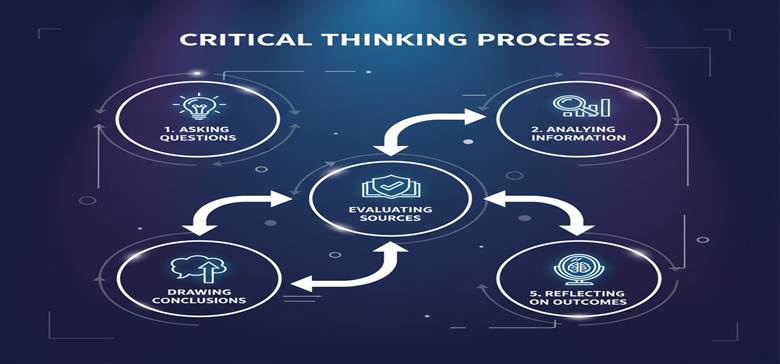
Critical thinking is the process of objectively analyzing information, evaluating evidence, questioning assumptions, and drawing reasoned conclusions. It goes beyond memorizing facts or accepting information at face value. Instead, it involves a careful examination of arguments, recognition of biases, and the willingness to consider alternative viewpoints.
Key Components:
- Analysis: Breaking down information into parts.
- Evaluation: Judging the credibility and relevance of sources.
- Inference: Drawing logical conclusions from data.
- Explanation: Justifying one’s reasoning.
- Self-Regulation: Assessing and correcting one’s own thinking.
Example:
A student is researching the effects of social media on youth. Instead of citing only popular news stories, she seeks out academic studies, compares different findings, questions whether the research is biased, and notes limitations before forming her own balanced conclusion.
What are Reflective Practices?
Reflective practice is the deliberate process of thinking about one’s actions, experiences, and decisions to learn and grow. It involves both looking back on what happened and planning future improvements.
Key Elements:
- Self-awareness: Recognizing one’s feelings, biases, and strengths.
- Critical Analysis: Examining what went well or poorly and why.
- Learning Orientation: Willingness to change based on feedback or new insights.
- Action Planning: Using lessons learned to improve future behavior.
Example:
After leading her first student club meeting, a college student realizes she spoke too quickly and didn’t invite enough input from members. She reflects on this and decides to prepare an agenda and ask open questions at the next meeting to encourage participation.
Why Are These Skills Important?
- Better Decisions: They help avoid rash judgments and base choices on evidence.
- Effective Problem-Solving: Enable systematic approaches to complex issues.
- Personal Growth: Reflection transforms experiences into opportunities for continuous improvement.
- Ethical Awareness: Encourage consideration of the broader impact of actions.
Case Study: Critical Thinking and Reflection in Education—Improving School Lunches
Background:
At a government high school in Tamil Nadu, students frequently complained about the quality and nutritional value of their midday meals. Rather than simply protesting, the school’s student council decided to investigate the problem using critical thinking and reflective practice.
Critical Thinking in Action:
- The council began by analyzing the issue: They surveyed classmates, gathered information about the lunch menu, and compared it to recommended nutritional guidelines.
- They evaluated sources: Speaking with kitchen staff, teachers, and health professionals to understand constraints, such as budget or supply shortages.
- They inferred that while the meals met basic calorie requirements, they lacked fresh vegetables and variety, leading to both health concerns and student dissatisfaction.
Reflective Practice in Action:
- After presenting their findings to the school administration, the students reflected on their approach. They recognized that only focusing on complaints didn’t motivate change.
- They decided to act differently: The council proposed a solution—starting a small school vegetable garden to supplement the lunch program.
- Over the semester, they regularly reflected on progress, noting which crops grew best, how to involve more students, and how to approach teachers for support.
Result:
Within a few months, the school was able to add fresh vegetables to its lunches, improving both nutrition and student morale. The council’s critical thinking and reflective practice turned a common complaint into a collaborative, sustainable solution.
Developing Critical Thinking and Reflective Skills
- Ask Questions: Who, what, when, where, why, and how?
- Consider Alternatives: Don’t settle for the first idea or answer.
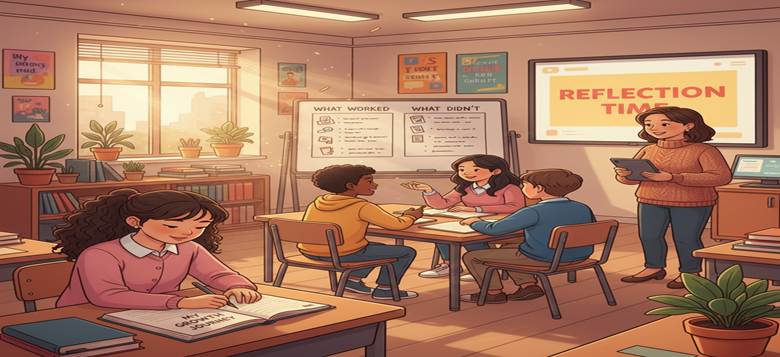
- Reflect Regularly: After any major experience, spend time considering what worked and what didn’t.
- Embrace Feedback: Accept guidance and constructive criticism from others.
- Adapt and Apply Learning: Use insights to change future behavior or strategies.
Conclusion
Critical thinking and reflective practices are key for navigating life’s challenges and opportunities. By questioning assumptions, evaluating evidence, and learning from experience, individuals become better problem-solvers, collaborators, and leaders—skills that are vital for personal fulfillment and for making a positive impact on society.