Introduction
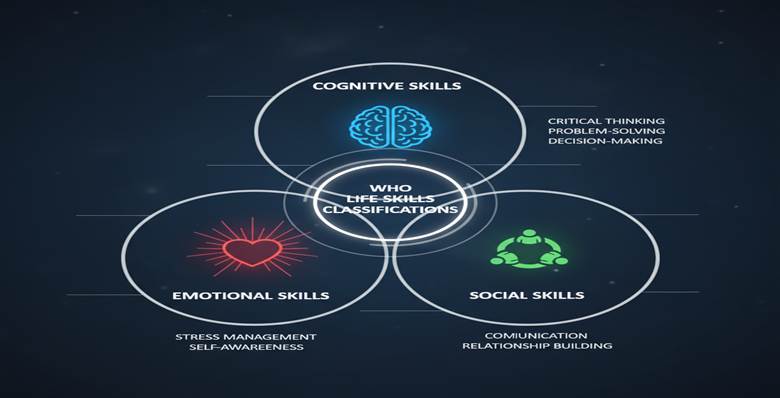
Life skills are essential abilities that enable individuals to manage daily challenges, interact effectively with others, and lead productive, fulfilling lives. Recognizing their importance, the World Health Organization (WHO) has identified a set of core life skills that are crucial for holistic development. These skills fall into three primary categories: cognitive skills, emotional skills, and social skills. This classification provides a framework for educational programs, youth development initiatives, and policy-making worldwide.
In this discussion, we’ll explore each category in depth, provide illustrative Indian examples, and examine relevant case studies to show how these skills are developed, applied, and nurtured in various contexts.
1. Cognitive Skills
Definition
Cognitive skills are mental capabilities that enable individuals to process information, think critically, make decisions, and solve problems. These are the skills that help us analyze situations and respond appropriately using logic and reasoning.
WHO Core Cognitive Life Skills
- Problem-Solving
- Decision-Making
- Creative Thinking
- Critical Thinking
- Self-awareness
Detailed Explanation and Indian Examples
a. Problem-Solving
This skill involves identifying problems, generating solutions, and choosing the best course of action. It’s vital for overcoming challenges in academics, work, and daily life.
Indian Example:
In Indian schools, students often participate in science and math olympiads, which foster problem-solving abilities. For instance, the National Science Olympiad (NSO) challenges students to tackle complex scientific problems, encouraging them to think analytically.b. Decision-Making
Effective decision-making enables individuals to assess options and select the most suitable one. This skill is crucial in both personal and professional contexts.
Indian Example:
Students choosing between different streams after 10th grade (science, commerce, arts) are exercising decision-making. Career counseling workshops in cities like Mumbai and Bangalore guide students through this process, teaching them to weigh pros and cons and consider long-term impacts.
c. Creative Thinking
Creative thinking promotes innovation and the ability to approach situations from new perspectives.
Indian Example:
The ‘Atal Tinkering Labs’ initiative, launched by NITI Aayog, encourages students to develop creative solutions using science and technology. Young innovators from small towns have developed affordable irrigation systems and low-cost sanitary pads, demonstrating creativity in addressing local problems.
d. Critical Thinking
Critical thinking involves analyzing information objectively and evaluating arguments or claims.
Indian Example:
The Supreme Court’s promotion of legal literacy and critical analysis in law colleges encourages students to scrutinize laws, judgments, and social issues. Moot court competitions are a practical example where students use critical thinking to build and defend arguments.
e. Self-Awareness
Understanding one’s strengths, weaknesses, values, and beliefs is foundational for personal growth.
Indian Example:
Yoga and meditation programs, such as those promoted by The Art of Living foundation or in the school curriculum in states like Uttarakhand, help students develop self-awareness and mindfulness.
Case Study: Akanksha Foundation
The Akanksha Foundation, working in Mumbai and Pune, uses project-based learning to develop cognitive skills among underprivileged children. Through collaborative projects, students learn to identify community problems (like waste management), brainstorm solutions, and implement action plans. This hands-on approach nurtures problem-solving, decision-making, and critical thinking.
2. Emotional Skills
Definition
Emotional skills are those that allow individuals to understand, express, and manage their feelings and emotions effectively. These skills contribute to emotional intelligence and resilience.
WHO Core Emotional Life Skills
- Coping with Emotions
- Coping with Stress
- Empathy
Detailed Explanation and Indian Examples
a. Coping with Emotions
This skill involves recognizing and regulating a range of emotions, such as anger, sadness, fear, or happiness.
Indian Example:
Schools like The Shri Ram School in Delhi provide life skills education that includes emotional regulation exercises. Students are taught to express emotions in healthy ways, such as through art, storytelling, and group discussions.
b. Coping with Stress
Being able to manage stress is crucial for maintaining mental health and well-being, especially in a high-pressure academic environment.
Indian Example:
The Central Board of Secondary Education (CBSE) conducts annual ‘Exam Stress Helpline’ programs, where trained counselors help students cope with exam anxiety and stress through relaxation techniques, time management tips, and positive thinking.
c. Empathy
Empathy is the ability to understand and share the feelings of others, crucial for building compassionate relationships.
Indian Example:
The ‘Buddy System’ in several Indian schools’ pairs senior students with juniors. Seniors are trained to listen, support, and guide their juniors through school life, nurturing empathy and a caring environment.
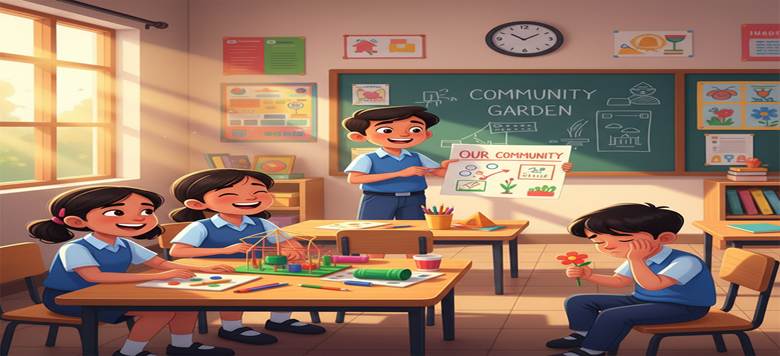
Case Study: Snehi Counselling Centre
Snehi, a Delhi-based mental health NGO, runs programs in urban schools to build emotional resilience. Through workshops and counseling sessions, students learn about emotional triggers, stress management, and empathy. The program has reported a reduction in bullying and improved peer relationships, as children become more aware of their emotions and those of others.
3. Social Skills
Definition
Social skills are interpersonal abilities that enable individuals to interact positively, communicate effectively, resolve conflicts, and build healthy relationships.
WHO Core Social Life Skills
- Interpersonal Relationships
- Effective Communication
- Negotiation/Refusal Skills
Detailed Explanation and Indian Examples
a. Interpersonal Relationships
This involves forming and maintaining positive relationships with others, which is essential for teamwork, leadership, and social support.
Indian Example:
Scout and Guide movements in India, as well as National Service Scheme (NSS) activities in colleges, promote teamwork and leadership. Participants learn to work collaboratively, respect differences, and build supportive communities.
b. Effective Communication
Being able to clearly express ideas, listen actively, and interpret non-verbal cues.
Indian Example:
The Model United Nations (MUN) conferences, popular in urban Indian schools, are platforms where students practice public speaking, debate, and diplomatic communication, often on global issues.
c. Negotiation/Refusal Skills
These skills help individuals assert their rights, resist peer pressure, and resolve conflicts amicably.
Indian Example:
Adolescent education programs by organizations such as UNICEF India include sessions on saying ‘No’ to drugs, early marriage, and unsafe behaviors. Role-play and scenario-based learning help teens practice negotiation and refusal.
Case Study: Pravah (Youth Development NGO)
Pravah’s “SMILE” (Student Mobilization Initiative for Learning through Exposure) program works with youth across India to develop social skills. Through community immersion, group discussions, and leadership camps, participants build communication, negotiation, and relationship skills. Alumni of SMILE often take up leadership roles in social change initiatives, demonstrating the lasting impact of these skills.
4. Integration of Life Skills in Indian Education and Society
National Curricula and Policy
The National Education Policy (NEP) 2020 emphasizes life skills as a core component of the school curriculum, advocating for activity-based and experiential learning. CBSE, ICSE, and various state boards have incorporated life skills training in subjects and co-curricular activities.
Life Skills in Rural and Marginalized Communities
NGOs like Pratham and Room to Read deliver life skills education to children in rural and marginalized communities, using storytelling, games, and local examples to make concepts relatable.
Example:
In Jharkhand and Chhattisgarh, girls’ education programs include negotiation skills to help girls convince families to delay marriage and support their schooling.
Corporate Programs
Many Indian companies run life skills workshops as part of Corporate Social Responsibility (CSR) or employee development. For example, Tata Consultancy Services (TCS) has “Employability Programs” that combine technical skills with communication, decision-making, and teamwork training.
5. Challenges and Opportunities
Challenges
- Societal Stigma: Discussing emotions or mental health can still be taboo in some parts of India.
- Lack of Trained Educators: Not all schools have teachers skilled in life skills facilitation.
- Urban-Rural Divide: Rural students may have less access to structured life skills programs.
- Assessment Difficulties: Measuring the impact of life skills is harder than testing academic knowledge.
Opportunities
- NEP 2020: A renewed focus on holistic development and skill-based education.
- Digital Platforms: Initiatives like Diksha and e-Pathshala make life skills content accessible online.
- NGO Partnerships: Collaboration between schools and NGOs brings expertise and innovation to life skills education.
- Youth Leadership Movements: Programs like Teach For India, Young India Fellowship, and Ashoka Youth Venture nurture socially conscious leaders.
6. Conclusion
Life skills, as classified by the WHO into cognitive, emotional, and social skills, are essential for every individual’s development and societal progress. In India, these skills are being recognized and integrated through educational reforms, NGO initiatives, and policy changes. Real-life examples—from science olympiads and Atal Tinkering Labs to Snehi’s counseling work and Pravah’s youth programs—demonstrate how life skills build resilience, empathy, leadership, and adaptability.
For a diverse country like India, scaling life skills education can empower young people to face modern challenges, contribute positively to society, and lead fulfilling lives.