Introduction
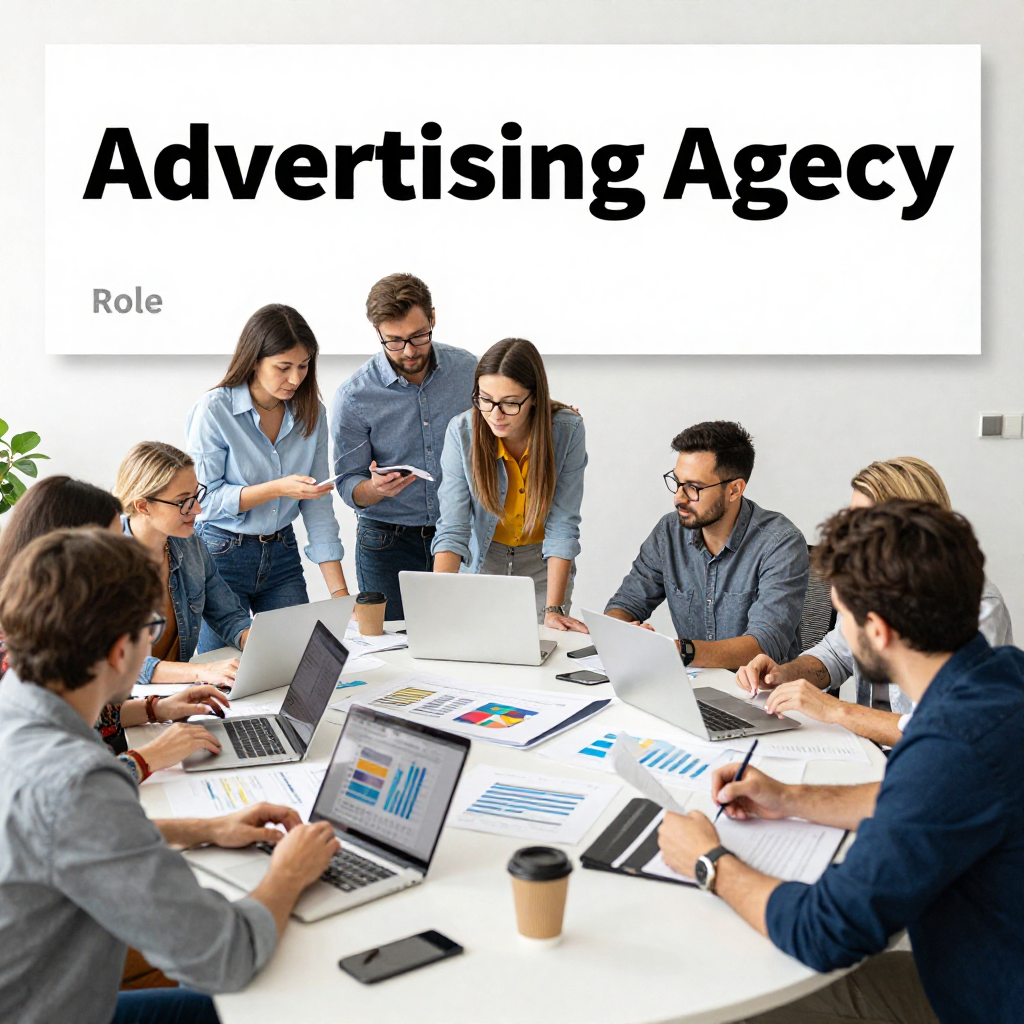
An advertising agency, frequently stated as a creative agency or an ad agency, is a business dedicated to creating, planning, and handling advertising and sometimes other forms of promotion and marketing for its clients. Private and public sector businesses use advertising agencies when they need help spreading the word about their products and services. Such agencies vary in size and regularly concentrate on specific types of advertising tasks. Typical ad agency clients include businesses and corporations, nonprofit organizations, and private agencies.

Normally speaking, most advertising agencies generate visuals and supervise media buying and advertising campaign planning. They also deliver consultation services and implement branding plans.
Role & functions of advertising
- Raise awareness about offerings.
- Encourage the trial of a new product & service.
- Encourage trade channels.
- Create insight & assurance.
Purpose of advertising agency
- Advice & guidance on marketing.
- Advice & guidance on advertising and media .
- Organize & develop , outdoor, and electronic advertisements.
- Support other communication tasks.
I. Types of advertising agency
1. Full Service
These are the medium- or large-sized agencies capable of directing complete advertising campaigns. They plan, create, and produce the advertisement. They are also executing marketing research for the company. A full-service advertising agency offers a complete range of services that address both the traditional and digital marketing aspects of a business. Full-service ad agencies are made up of a team of experts, and they’re a one-stop shop of services:
These include sales promotion, personal selling, packing, design, and publicity along with advertising. Thus, these agencies are able to handle all the various related activities of advertisement from beginning to end.
A full-service ad agency is suitable if your business needs a full-fledged marketing plan. They’ll be able to deliver results through a TV ad as well as a social media campaign. Because their marketing activities are so comprehensive, you’ll also want an internal hire who can devote a lot of their time to working with this agency.
2. Creative boutique
A smaller-sized firm, particularly in creative ad services. payrolls. They generally tend to be local agencies, with a unique work ethic and management style as compared to some of the larger advertising agencies.
Mostly the big brands should really consider using boutique agencies for reasons. Creative boutiques are usually founded by members of the creative departments of full-service agencies who leave the firm and take with them clients who want to retain their creative talent.
The client may seek an external creative agency for two reasons:
- Because he wants an additional creative effort
- .
Advantages of creative boutiques
There are some advantages of creative boutiques.
- Creative boutiques are generally much cheaper than full agencies.
- Very creative and innovative ads.
- No other function is performed creating actual ads.
- Small-sized agencies with copywriters, directors, and creative people.
- It is effective when supervised on bigger projects.
- In both bigger agencies and creative boutiques, the size of the core team creating the campaign is the same.
- It frequently teams up with external agencies to create fully formed creative strategies for their clients.
- Due to greater flexibility and personalized interaction, boutiques are very useful and creative when dealing with smaller campaigns.
Few creative boutiques in India:
- RMG David
- Vyas Gianetti Creatives
- Chlorophyll
3. Media buying agency
Media buyers negotiate and purchase audience-targeted time and advertising space to convey a marketing message.
A media buy is the purchase of advertising from a media company such as a television station, newspaper, magazine, blog, or website. It also entails the negotiation for price and placement of ads, as well as research into the best new venues for ad placement.
There are three integral aspects of the media buying process:
a. Networking
Media buyers must be able to grow and cultivate relationships with important channel owners. Airtime is not unlimited, and get the optimal spaces, it is important to know the right people.
b. Investigation
Keeping up media trends is an important task when it comes to media buying. The development of the communications business must be understood; purchasers must be on top of new platforms and their target markets and be able to translate that into beneficial client recommendations.
c. Negotiation
Media buyers should not only be able to negotiate fair prices for the media slots. But also find deals or extras to profit clients.
Media Buying agencies are
- Mindshare
- Initiative Media (LOWE)
- Zenith Media (Bates, Saatchi & Saatchi)
- Optimedia (Publicis)
- Starcom (Leo Burnett)
- Fulcrum (HTA) Normal 0 MicrosoftInternetExplorer4
4. In-house agency
, and every organization has its own needs. Some firms undertake all of their marketing themselves (in-house) without involvement from external parties and advertising agencies.
Advantages of an In-House Agency
- Dedicated, focused team. An in-house marketing team will give you 100 percent focus on your business, and they are readily available for day-to-day needs that may come your way.
- Stronger brand knowledge. Your employees are the people who know your business best. That means an in-house marketing team will have hands-on experience with your employees, customers, industry, and culture. That can translate into marketing and messaging that better represents your brand.
- Better access to resources. Because your employees are on-site, they have better access to the people and processes within your business. As a result, your marketing team can complete tasks much quicker. It’s far easier for an on-site marketing team to share photos, videos, and updates to social media because they have real-time access to what’s going on at the company.
- Keep relationships in-house. A marketer’s job is often to build relationships—with influencers, the media, clients, prospects, etc. It can be extremely beneficial for your marketing team to develop and own these relationships.
- .
Disadvantages of In-House Agencies
- Expensive. Hiring full-time employees can be expensive. And, not just the salary, but also the overhead costs that go along with it. For instance, you follow current trends.
- Skills gaps. Depending on your budget, you might not be able to hire people to fill all the marketing skills you need. It can be difficult to find a few key people who can fill all of your designated roles—writing, editing, design, social media, SEO, advertising, etc. That may mean you’re still hiring contractors, freelancers, or agencies to fill the roles your team can’t handle.
- Channel vision your business and industry. Additionally, they can often find themselves behind on marketing trends. Both of these issues could make your marketing stiff or stale.
- Longer Turnaround—It may take in-house teams longer to produce campaigns than advertising agencies due to lack of experience or resources.
Media Buying agencies are
- Mindshare
- Initiative Media (LOWE)
- Zenith Media (Bates, Saatchi & Saatchi)
- Optimedia (Publicis)
- Starcom (Leo Burnett)
- Fulcrum (HTA) Normal 0 MicrosoftInternetExplorer4
In-house agencies in India are:
- Levers – Lintas (previously)
- Videocon – Confidence
- Reliance – Mudra (when Mudra started out)
5. Specialized agency
A specialized agency deals its services within a specific industry, such as real estate, financial, medical, and education, or a particular function. Specialized agencies therefore focus on specific areas only. It offers only one or selected services out of the total range of services. Those agencies do not have specialization in all services or are not supported by other specialized subsidiaries. For instance, creative boutiques and media buying agencies.
These agencies
- Commission: A fixed rate of commission.
- Fees: In addition to commission, it may insist on payment of fees.
- Percentage charges: The agency charges some percentages of charges as markup when the agency buys some services from outsiders.
- Incentives-based system: The fees here are based on how well the agency performs in achieving the predetermined goals.
Other advertising agency
a. Traditional Ad Agency
Traditional ad agencies mostly work with traditional forms of media, such as newspapers, television commercials, radio, and print.
b. Public Relations Firms
Many large companies use both advertising agencies and public relations (PR) firms. PR agencies are best for organizations looking to improve the public’s awareness of the brand or their public image. Public relations firms develop and implement programs to manage an organization. For example, publicity, image, affairs with consumers, and other relevant publics, including employers, suppliers, stockholders, government, labor, and the general public.
c. Branding Ad Agency
A branding agency is best if you are considering or planning an organizational rebrand or are interested in seeing how your current brand is perceived in the market.
d. Interactive agencies
Interactive agencies are a little unique from others because of the services that they offer. They offer services such as web development and web design, internet advertising-commerce consulting, and search engine marketing.
e. Social Media Agencies
Social media agencies form a subdivision of new media agencies. They concentrate on using social media such as Facebook, Twitter, and blogs to communicate with consumers and business customers.
f. Sales Promotion Agencies
These agencies focused on the provision of sales promotions such as contests, games, sweepstakes, and refund and rebate offers.
g. Direct Marketing Agencies
The fastest growing area in IMC is direct marketing, where companies communicate with their customers through telemarketing, direct mail, and other forms of direct-response advertising.