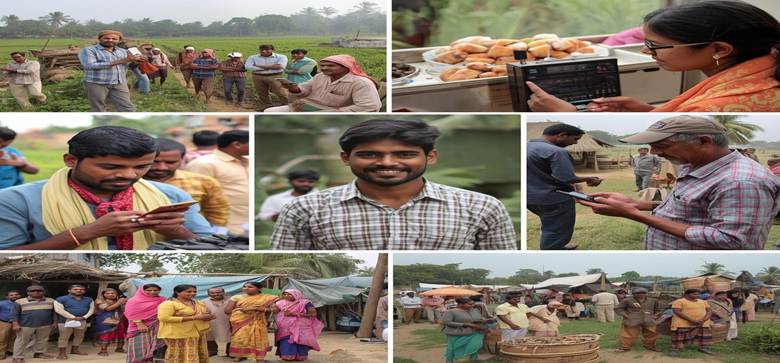
Meaning: Rural communication refers to the processes and methods used to share information, ideas, and knowledge within rural communities. It involves the exchange of messages among individuals, groups, and institutions in rural areas, often focusing on agriculture, health, education, social development, and community welfare. The primary aim of rural communication is to inform, educate, motivate, and empower rural populations, enabling them to improve their quality of life.
The scope of rural communication includes:
Channels of Communication:
- Traditional media (folk media, community meetings, interpersonal communication)
- Mass media (radio, television, newspapers)
- Digital media (mobile phones, internet, social media)
Content Areas:
- Agricultural information (farming techniques, crop updates, weather forecasts)
- Health and hygiene awareness
- Educational programs
- Government schemes and developmental programs
- Social issues (gender equality, literacy, environmental conservation)
Stakeholders:
- Rural population (farmers, women, youth, local leaders)
- Government agencies and extension workers
- Non-governmental organizations (NGOs)
- Media organizations and journalists
Objectives:
- Disseminate useful information for rural development
- Encourage participatory communication and local involvement
- Bridge the information gap between urban and rural populations
- Promote behavioral and social change
Challenges:
- Low literacy rates
- Limited access to technology and infrastructure
- Language and cultural barriers
In summary, rural communication plays a crucial role in transforming rural societies by facilitating access to information and enabling informed decision-making, ultimately contributing to sustainable rural development.
II. Communication Strategies for Rural Market
Reaching rural markets requires tailored communication strategies that consider the unique characteristics and challenges of rural consumers. Here are some effective strategies with examples.
1. Use of Traditional Media and Folk Communication
Strategy: Employ locally popular traditional media such as puppet shows, folk songs, street plays, and village fairs to deliver messages.
Example: Hindustan Unilever used “Nukkad Nataks” (street plays) to promote Lifebuoy soap’s handwashing benefits during village fairs.
2. Localized Messaging
Strategy: Customize content in local languages and dialects to increase relatability and understanding.
Example: Coca-Cola used local languages and culturally relevant themes in their rural ad campaigns to connect with diverse audiences across India.
3. Interpersonal Communication
Strategy: Deploy field staff, village influencers, and opinion leaders (such as school teachers or health workers) to communicate messages.
Example: ITC’s e-Choupal initiative trained local farmers as “Sanchalaks” (coordinators) to spread information about products and services to fellow villagers.
4. Demonstrations and Experiential Marketing
Strategy: Organize live demonstrations and product sampling in village markets or during community events.
Example: Tractor companies like Mahindra organize field demonstrations, allowing farmers to test-drive tractors and experience benefits firsthand.
5. Mobile Vans and Roads hows
Strategy: Use branded mobile vans equipped with audio-visual equipment to tour villages, display products, and conduct interactive sessions.
Example: Colgate-Palmolive’s “Colgate Bright Smiles, Bright Futures” van traveled to rural schools, demonstrating oral hygiene practices to children.
6. Partnership with Local Institutions
Strategy: Collaborate with self-help groups, cooperatives, and local NGOs for message dissemination and community mobilization.
Example: Microfinance firms partner with women’s self-help groups to educate rural women about financial products.
7. Use of Rural Media Channels
Strategy: Advertise through rural-specific channels like All India Radio, local cable networks, and rural newspapers.
Example: Agricultural companies use All India Radio to broadcast weather updates and farming tips in regional languages.
In summary:
Effective rural communication combines traditional and modern approaches, localizes content, leverages trusted influencers, and uses engaging, experiential methods to build trust and awareness among rural audiences.