Introduction
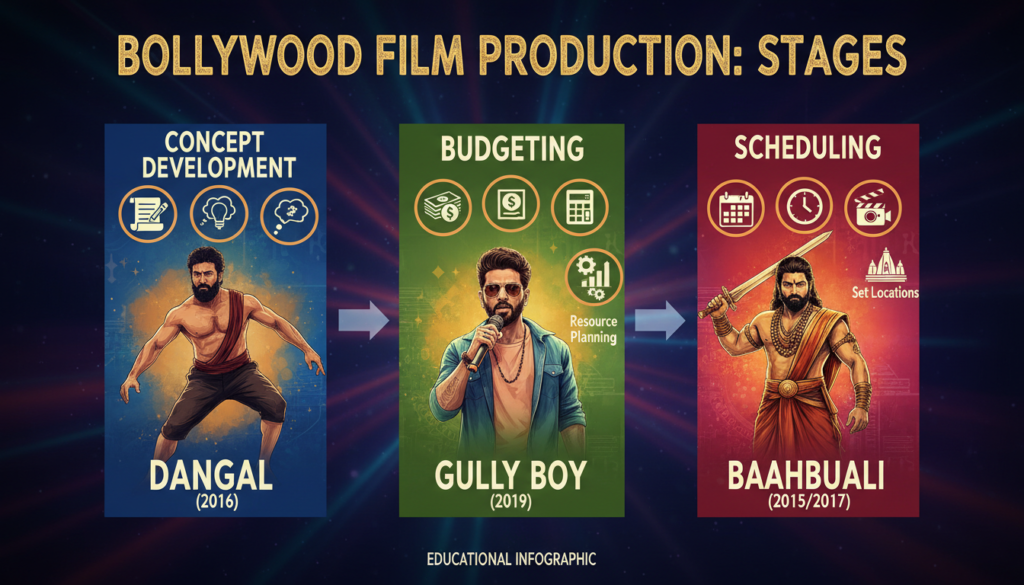
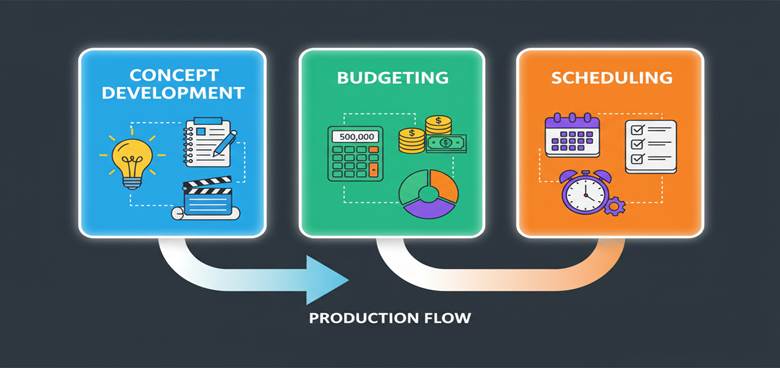
The journey of creating a film or television project—from a mere idea to a finished product—relies on a series of organized and interconnected stages: concept development, budgeting, and scheduling. Each stage is crucial not only for the creative vision but also for the practical realities of turning a script into a successful production. Whether it’s a blockbuster movie, a commercial, or a short film, mastering these three pillars is essential for filmmakers, producers, and media professionals.
1. Concept Development
Definition and Purpose
Concept development is the initial stage of production, where a raw idea is refined into a viable project. It involves brainstorming, research, and creative planning to define the story, characters, tone, and unique selling points. This phase is vital because it sets the foundation for the entire production, ensuring the final product will resonate with its target audience and achieve its intended objectives.
Stages in Concept Development
A. Idea Generation
Every production starts with an idea—a storyline, a character, a social message, or a visual concept. Idea generation can arise from personal experience, current events, literature, or even a simple “what if” question. For example, the concept for the film Slumdog Millionaire was inspired by a novel and the curiosity about how a street child could win a quiz show.
B. Research and Validation
Once an idea is formed, research is necessary to validate its potential. This includes studying the target audience, identifying market trends, and analyzing similar productions. Filmmakers might look into box office data, audience demographics, or critical responses to related films.
C. Story Development
The idea is expanded into a narrative. This includes developing the plot, creating character arcs, defining the setting, and establishing themes. Writers may draft a treatment—a brief summary of the story—which evolves into a script.
D. Pitching and Feedback
The concept is pitched to producers, studios, or investors. Feedback at this stage can lead to further refinement. For example, the creators of the web series Sacred Games developed multiple pitches before Netflix approved the project.
E. Packaging
The project is “packaged” by attaching talent (actors, directors, writers) and preliminary creative elements. This enhances the project’s marketability and helps in securing financing.
Example: Bollywood Film Concept
The creators of Dangal developed the film’s concept by focusing on gender empowerment in a sports biopic format. They researched real-life wrestling families in Haryana, crafted an emotionally compelling narrative, and pitched the story to Aamir Khan, whose involvement as lead actor and producer helped secure funding and distribution.

2. Budgeting
Definition and Purpose
Budgeting is the process of estimating all costs associated with a production, from pre-production to marketing. A well-constructed budget ensures that the production can be completed within its financial means, allocates resources appropriately, and provides a blueprint for financial management.
Key Components of a Production Budget
A. Above-the-Line Costs
These are creative expenses, including writer, director, producer, and principal cast salaries. For example, in Hollywood, a significant portion of a blockbuster’s budget may go to star actors and directors.
B. Below-the-Line Costs
These cover technical and logistical expenses: crew wages, equipment rental, set construction, costumes, props, and post-production. For a film like Baahubali, below-the-line costs included massive set designs and advanced VFX.
C. Production Costs
These are day-to-day expenses incurred during shooting: location fees, catering, transportation, insurance, and permits.
D. Post-Production Costs
Expenses related to editing, sound design, visual effects, color grading, and music composition.
E. Marketing and Distribution
Advertising, publicity, festival fees, and the costs of releasing the film (prints or digital formats).
F. Contingency
A reserve fund (usually 5–10% of the total budget) set aside for unforeseen expenses.
Budgeting Process
- Script Breakdown: Analyze the script to identify all cost elements (locations, number of shooting days, special effects, etc.).
- Research and Quotes: Obtain quotes for locations, equipment, and services. Consult past budgets for similar projects.
- Drafting the Budget: Use spreadsheets or budgeting software to organize and calculate costs.
- Review and Approval: The producer and financiers review the budget, making adjustments as necessary.
- Monitoring: Track expenses during production to ensure adherence to the budget.
Example: Budget Range
- Low-budget indie film: ₹2–10 crore
- Mainstream Bollywood film: ₹30–100 crore
- Big Hollywood blockbuster: $100–250 million (₹750–2000 crore)
Dangal was produced with a budget of approximately ₹70 crore, with significant investment in authentic locations, training for actors, and marketing.
3. Scheduling
Definition and Purpose
Scheduling is the process of planning the timeline for every stage of production to ensure efficient use of time and resources. A production schedule organizes when and where shoots occur, which actors and crew are needed, and how the project will progress from pre-production through release.
Types of Schedules
A. Master Schedule
An overview of the entire project, including development, pre-production, shooting, post-production, and release.
B. Shooting Schedule
A detailed plan of daily shooting activities, specifying scenes, locations, cast, and crew required for each day.
C. Call Sheets
Daily documents distributed to the cast and crew detailing the next day’s schedule, locations, call times, and other essentials.
Key Elements of Scheduling
- Script Breakdown: Identify all shooting elements, such as scenes, locations, actors, props, and effects.
- Location Management: Group scenes by location to minimize travel and setup time.
- Cast and Crew Availability: Schedule shoots based on actors’ and key crew members’ availability.
- Weather and External Factors: Plan around weather conditions or special requirements for outdoor shoots.
- Time Management: Estimate the duration of each scene and build in buffer time for delays.
- Coordination: Communicate the schedule to all departments to ensure everyone is prepared.
Example: Scheduling in Practice
For Baahubali, with its massive sets and battle sequences, the shooting schedule was planned over multiple years, with separate units working simultaneously on action, VFX, and dialogue scenes. The production team used software to coordinate hundreds of cast and crew across several locations.
Case Study: Content Development, Budgeting, and Scheduling in “Gully Boy” (2019)
Background
Gully Boy is a Bollywood film directed by Zoya Akhtar and inspired by the real-life Mumbai street rappers Divine and Naezy. The film chronicles the journey of a young man from the slums who rises to fame as a rap artist. Gully Boy became a cultural phenomenon, not only for its music and performances but also for its authentic portrayal of urban India.
Concept Development in Gully Boy
The idea for Gully Boy originated from Zoya Akhtar’s fascination with Mumbai’s underground rap scene. The concept was developed by researching the lives of local rappers and understanding the social and economic struggles in the city’s slums. The writers crafted a narrative centered on ambition, creativity, and the transformative power of art.
To validate the project, the filmmakers attended rap battles, engaged with real artists, and studied hip-hop culture in Mumbai. This research shaped the story’s authenticity and helped create relatable characters and situations.
Akhtar’s team pitched the project to Excel Entertainment, packaging it with A-list actors like Ranveer Singh and Alia Bhatt, which increased its marketability and secured financing.
Budgeting in Gully Boy
Although Gully Boy was not a big-budget spectacle like many Bollywood films, it required careful planning to balance realism with high production values. The budget covered:
- Above-the-line: Salaries for director, writers, lead actors (Ranveer Singh, Alia Bhatt).
- Below-the-line: Costs for location shooting in Mumbai slums, set construction, and hiring real-life rappers as cast and consultants.
- Production: Permits, transportation, catering, and equipment rental for on-location shoots in crowded, unpredictable environments.
- Post-production: Editing, original soundtrack creation, music rights, and sound mixing.
- Marketing: A major campaign leveraging social media, music videos, and live performances at youth festivals.
- Contingency: Buffer for delays due to weather, crowd control, and last-minute location changes.
The film was made on a budget of approximately ₹50 crore (USD ~$7 million), modest by Bollywood standards, but sufficient for its ambitious goals.
Scheduling in Gully Boy
Filming in the bustling streets and slums of Mumbai presented unique challenges. The production schedule was designed to:
- Maximize Efficiency: Scenes were grouped by location, reducing the need to move cast, crew, and equipment across the city.
- Adapt to Environment: Shooting was often done early in the morning or late at night to avoid crowds and minimize disruptions.
- Coordinate Talent: Ranveer Singh and Alia Bhatt had busy schedules, so their scenes were prioritized and shot in blocks.
- Music Integration: Live performances were scheduled alongside real rap battles, capturing authentic energy and audience reactions.
- Weather Planning: The team planned around Mumbai’s unpredictable monsoon, scheduling outdoor scenes for dry months and booking backup indoor locations.
Despite these challenges, principal photography was completed in approximately 50 days, thanks to meticulous planning and coordination.
Outcome and Lessons Learned
Gully Boy was released in February 2019, receiving critical acclaim and commercial success. The film’s realistic portrayal of Mumbai’s hip-hop scene, combined with powerful performances and an energetic soundtrack, resonated with audiences in India and abroad.
Key takeaways from the production process include:
- Authentic concept development—grounded in real-life research—can make even a modest-budget film stand out.
- Detailed budgeting ensures that resources are allocated wisely, especially when shooting on location.
- Careful scheduling is critical for managing the unpredictability of urban environments and busy star calendars.
The success of Gully Boy demonstrates how well-executed concept development, budgeting, and scheduling can turn a local story into a global phenomenon.
Conclusion
Concept development, budgeting, and scheduling are the pillars of successful media production. From the initial idea to the final release, each stage requires creativity, planning, and adaptability. By examining examples and real-world case studies like Dangal and Gully Boy, aspiring filmmakers gain practical insights into how to bring compelling stories to life—on time, on budget, and with maximum impact. Whether working on indie projects or major blockbusters, mastering these fundamentals is the key to a sustainable and rewarding career in the entertainment industry.