CONTRACT & NEGOTIATIONS
Introduction
Contract and negotiation are at the heart of effective film project management, ensuring clear expectations and legal protection for all parties involved in a production.
In the Indian film industry, contracts formalize relationships among producers, talent (actors, directors, writers), crew, vendors, and distributors. Key elements of these agreements include the scope of work, compensation, credit, intellectual property rights, timelines, confidentiality, and dispute resolution mechanisms.
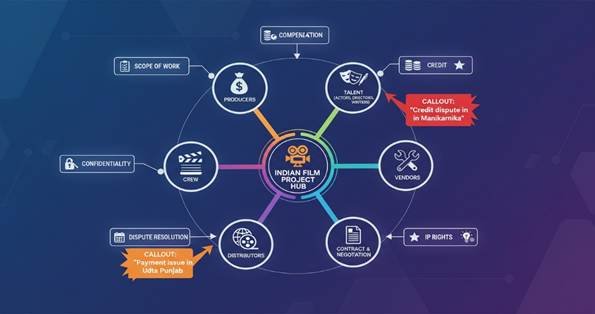
Negotiation is the process of aligning the interests of different stakeholders. For example, an actor might negotiate for profit-sharing or creative input, while a director may seek control over the final edit. Crew members, often represented by unions like FWICE (Federation of Western India Cine Employees), negotiate standardized rates and working conditions. Writers, supported by organizations such as the Screenwriters Association (SWA), secure rights for credit and royalties.
Typical contracts in film project management include:
- Talent contracts (defining roles, compensation, and exclusivity)
- Crew and service agreements (outlining job responsibilities and payment)
- Location and equipment rental agreements (detailing usage, fees, and damages)
- Music licensing and sync rights (specifying terms for the use of music)
- Distribution and sales contracts (covering release, territories, and revenue sharing)
Clear, legally binding contracts reduce the risk of disputes, delays, and financial losses. Real-world cases—such as disagreements over credit in “Manikarnika” or payment issues in “Udta Punjab”—highlight the importance of precise agreements and thorough negotiation.
Ultimately, successful film project management depends on contracts that balance creative freedom with legal safeguards, allowing filmmakers to focus on storytelling while minimizing risks and protecting everyone’s interests.
I. TALENT CONTRACTS (ACTORS, DIRECTORS, WRITERS)
Talent Contracts (Actors, Directors, Writers) in Film Making: Contracts & Negotiations
Talent contracts are foundational legal documents in film making, defining the relationship between a production company and creative professionals such as actors, directors, and writers. These agreements not only outline the scope of work, compensation, and credit, but also establish clear boundaries for intellectual property rights, creative control, and dispute resolution. Effective negotiation and drafting of talent contracts are essential to prevent misunderstandings and protect both the production and the talent involved.
1. Key Elements of Talent Contracts
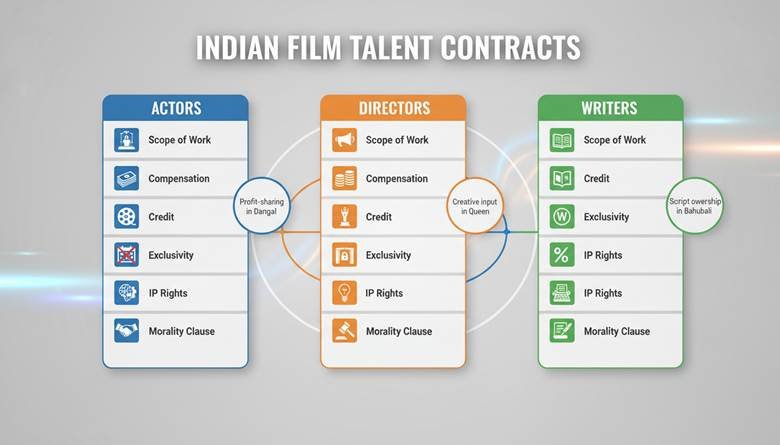
- Scope of Work: Specifies the creative responsibilities of the talent (e.g., acting in a lead role, directing the entire film, writing the screenplay).
- Compensation Structure: May include a fixed fee, performance bonuses, or profit-sharing arrangements (percentage of box office or net profits).
- Credit and Attribution: Defines how the talent will be credited on screen and in promotional material.
- Exclusivity Clauses: Restricts talent from working on competing projects during the contract period.
- Schedule and Availability: Outlines the dates and time commitment expected from the talent.
- Termination and Exit Clauses: Details circumstances under which either party can terminate the contract.
- Intellectual Property Rights: Clarifies ownership of creative output (e.g., script rights, performance rights).
- Morality and Behavior Clauses: Ensures talent upholds certain standards, protecting the film’s reputation.
2. Negotiation Dynamics
Negotiation is a two-way process where both the producer and talent strive to maximize their interests. High-profile actors and directors often negotiate for profit participation, script or edit approval, or a say in casting. Writers may negotiate for royalties, screen credit, and creative input, especially if they are adapting their own work.
Negotiation Examples:
- Profit Sharing: In “Dangal” (2016), actor Aamir Khan reportedly chose a profit-sharing model over a fixed fee, ensuring he benefited directly from the film’s box office success.
- Creative Control: Director Sanjay Leela Bhansali is known for negotiating extensive creative control in his contracts, including final cut privileges.
3. Case Studies and Real-World Examples
Case Study 1: “Manikarnika: The Queen of Jhansi” (2019)
- Context: The film saw a dispute between co-director Krish and lead actress Kangana Ranaut, who took over directorial duties mid-production.
- Contractual Issue: The controversy centered around directorial credit and creative control. Allegedly, the absence of a clear, binding contract on directorial roles led to public disputes and confusion over final credits.
- Lesson: Detailed clauses regarding creative decision-making and credit attribution are crucial for avoiding such conflicts.
Case Study 2: Writer’s Rights and SWA Intervention
- Context: The Screenwriters Association (SWA) of India has intervened in several cases where writers were denied full credit or adequate compensation.
- Example: For the film “Stree” (2018), writers Raj Nidimoru and Krishna D.K. successfully negotiated for both payment and screen credit, with SWA support ensuring industry standards were met.
- Lesson: Strong contracts, coupled with union support, empower talent to claim their due recognition and royalties.
Case Study 3: Royalty and Residuals in Music Biopics
- Context: In biographical films like “The Dirty Picture” (2011) and “Sanju” (2018), writers and actors negotiated for ongoing royalties based on the film’s continued commercial success (TV, streaming, and international releases).
- Lesson: Talent contracts should consider emerging revenue streams (e.g., OTT platforms, global markets) rather than focusing solely on domestic theatrical release.
Example: “Queen” (2013) and Creative Input
- Actress Kangana Ranaut negotiated for creative input, including improvisation of dialogues, which became a hallmark of her character and contributed to the film’s critical success.
- The contract included clauses allowing for such improvisation, demonstrating the value of flexible, creative-friendly agreements.
4. Risks and Disputes from Poorly Drafted Contracts
- Ambiguity: Vague contracts can lead to disputes, such as disagreements over the extent of creative input or final authority.
- Delayed Payments: Without clear compensation deadlines and penalties, talent may face delayed or incomplete payments, as reported by various crew and actors in Bollywood.
- Misattribution: Lack of clarity on credit can result in legal battles, as seen in the “Manikarnika” dispute.
5. Role of Industry Associations
- Screenwriters Association (SWA): Provides standardized contract templates, legal support, and resolves disputes on credit and compensation for writers.
- Federation of Western India Cine Employees (FWICE): Advocates for fair pay and safe working conditions for crew, establishing minimum standards for contracts.
6. Sample Talent Contract Clause
The Actor agrees to render exclusive services for the Production during the period from 1st August 2024 to 15th October 2024. The Producer shall pay the Actor a total fee of INR 1.5 Crore, payable in three installments. The Actor shall receive top billing and onscreen credit as ‘Lead Actor’. Any breach of confidentiality or moral clauses may result in immediate termination of this agreement.
7. Conclusion
Talent contracts are the backbone of professional film making, especially in India’s dynamic and vibrant industry. Well-negotiated agreements ensure that creative contributors are fairly compensated, credited, and protected, while producers secure the rights and stability needed for smooth production. As the industry evolves—with new revenue streams and global opportunities—talent contracts and negotiations must adapt, emphasizing clarity, flexibility, and legal rigor.
II. Crew and Service Agreements in Indian Film Industry
Introduction
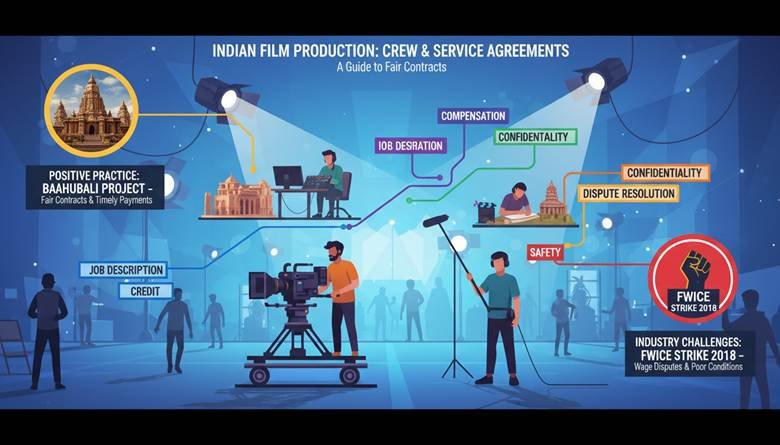
In the world of film production, crew and service agreements are vital contracts that outline the roles, responsibilities, and rights of the technical and support teams working behind the scenes. These agreements not only ensure smooth workflow but also provide legal protection and clarity for both the crew members and the producers.
Key Elements of Crew and Service Agreements
- Job Description & Scope of Work: Defines exact duties (e.g., cinematography, sound engineering, editing).
- Compensation & Payment Schedule: May be based on a daily, weekly, or project basis, often reflecting industry standards or union rates.
- Work Schedule: Outlines number of working days, shift timings, and provisions for overtime.
- Credit: Specifies whether and how the crew member will be credited in the film.
- Confidentiality Clause: Prevents disclosure of sensitive project information.
- Health, Safety & Insurance: Details coverage for accidents, injuries, or equipment damage on set.
- Termination Clause: Lays out grounds for dismissal or contract cancellation.
- Dispute Resolution: Procedures to follow in case of disagreements.
Negotiation Process
Negotiation in crew and service agreements primarily revolves around pay rates, scope of work, overtime compensation, and credit. In India, many crew members are represented by unions such as FWICE (Federation of Western India Cine Employees), which standardize pay scales and working conditions. However, negotiations become significant for non-unionized or specialized roles, or in high-profile projects where unique skills are in demand.
Example: “Baahubali” (2015–2017)
The production of “Baahubali: The Beginning” and “Baahubali: The Conclusion” serves as an excellent example of comprehensive crew and service agreements in action. Given the scale and complexity of the project, the producers employed hundreds of technicians, VFX artists, set designers, and support staff. Each crew member had a clearly drafted contract specifying their job role, deliverables, work duration, and compensation.
- VFX & Technical Crew: The agreements with VFX vendors such as Makuta VFX included detailed deliverables, timeline milestones, and confidentiality clauses due to the visual spectacle and secrecy around the film’s plot and special effects.
- Safety Provisions: With numerous action sequences and large sets, the contracts included clauses for safety protocols and insurance coverage for crew injuries.
These detailed agreements contributed to a disciplined workflow and minimized disputes, helping the films to not only achieve massive box office success but also set new industry standards for professionalism and crew welfare.
Case Study: FWICE Strike in Bollywood (2018)
In August 2018, a major dispute arose when thousands of members of the Federation of Western India Cine Employees (FWICE) went on strike over unpaid wages and demands for better working conditions. The strike brought several film and TV productions in Mumbai to a standstill.
Key Issues:
- Crew members complained about delayed payments, lack of proper contracts, and non-adherence to standardized rates.
- Producers were accused of hiring non-unionized workers at lower pay and without proper agreements, undermining union standards.
Negotiation & Resolution:
- After intense negotiations between FWICE, producers, and film industry representatives, a resolution was reached.
- Producers agreed to honor standardized contracts, ensure timely payments, and respect union-negotiated rates and conditions.
- This strike highlighted the importance of formal, written crew agreements and the power of collective bargaining in ensuring fair treatment and smooth project execution.
Conclusion
Crew and service agreements are the backbone of any successful Indian film production. They ensure that technical and support staff are fairly compensated, credited, and protected. High-profile films like “Baahubali” demonstrate the positive impact of clear, comprehensive agreements, while industry-wide disputes such as the 2018 FWICE strike underscore the risks of neglecting standardized contracts. Well-negotiated crew agreements not only safeguard worker rights but also contribute to the efficiency, safety, and success of film projects in India.
III. LOCATION AND EQUIPMENT RENTALS IN INDIAN FILMMAKING
1. Importance of Location in Filmmaking
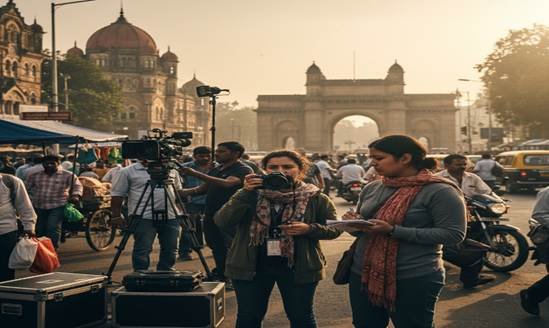
Locations play a crucial role in storytelling, as they add authenticity, mood, and context to a film. In India, diverse landscapes—from the bustling streets of Mumbai to the serene backwaters of Kerala—offer filmmakers a wide range of visual possibilities. The right location can enhance a film’s narrative, while the wrong one can detract from its believability.
Examples:
- Mumbai: Often used for urban, cosmopolitan stories (e.g., “Wake Up Sid,” “Gully Boy”).
- Rajasthan: Popular for historical or royal settings (e.g., “Jodhaa Akbar”).
- Kerala: Preferred for natural beauty and rural stories (e.g., “Dil Se,” “Bangalore Days”).
- Kolkata: Chosen for its colonial architecture and cultural vibe (e.g., “Piku,” “Kahaani”).
2. The Process of Location Scouting and Permissions
Location scouting involves finding places that fit the director’s vision and logistical needs. In India, this process includes:
- Research and Planning: Directors and location managers shortlist potential sites.
- Recce (Reconnaissance): Visiting and evaluating locations for accessibility, lighting, sound, and facilities.
- Permissions: Securing legal permissions from local authorities, police, and sometimes residents. This often involves paperwork and fees.
Case Study: “Slumdog Millionaire” (2008)
Most of “Slumdog Millionaire” was shot on location in Mumbai’s slums. Director Danny Boyle’s team had to navigate complex permissions and local sensitivities. The film’s authenticity was heightened by its real locations, but this also meant dealing with challenges like crowd control and unpredictable weather.
3. Equipment Rentals in India
Filmmaking equipment (cameras, lights, grip gear, sound equipment) can be prohibitively expensive to own, especially for students and independent filmmakers. Renting solves this problem.
Key Points:
- Major Rental Hubs: Mumbai, Hyderabad, Chennai, Delhi, and Bangalore.
- Equipment Types: Cameras (Arri, RED, Canon), lenses, lighting (LEDs, HMIs), grip equipment (dollies, jibs), audio gear.
- Rental Process:
- Choose equipment based on project needs and budget.
- Check availability and book in advance, especially during peak seasons.
- Sign rental agreements and submit ID proofs or security deposits.
- Inspect gear before accepting and after returning it.
Indian Examples:
- Qube Cinemas (Chennai): Known for camera and post-production equipment rentals.
- Accord Equips (Mumbai): Offers a wide range of filmmaking gear and is popular with Bollywood productions.
- RS Visuals (Delhi): Provides rental solutions for cameras and lighting.
Case Study: “Lunchbox” (2013)
Director Ritesh Batra’s team rented most of their equipment from Mumbai-based rental companies to shoot in crowded trains and apartments. The use of compact, high-quality digital cameras allowed the crew to work efficiently in tight locations and within a limited budget.
4. Challenges and Best Practices
Challenges:
- High Demand: During festival seasons or major shoots, equipment and locations may be booked out.
- Logistics: Transporting equipment across states requires permits, and delicate gear can be damaged en route.
- Permissions: Bureaucratic delays, especially for public areas, can disrupt schedules.
Best Practices:
- Always have backup equipment and alternate locations.
- Build relationships with rental providers for better deals and flexibility.
- Hire experienced location managers to streamline permissions.
IV. MUSIC LICENSING AND SYNC RIGHTS IN INDIAN FILMS
1. What is Music Licensing and Sync Rights?
- Music Licensing: The process by which filmmakers obtain legal permission to use copyrighted music in their films.
- Sync Rights: The right to synchronize a piece of music with visual media (film, TV, ads).
In India, most music used in films is composed specifically for them. However, using pre-existing tracks (Indian or international) requires obtaining sync rights.

2. The Indian Context
- Bollywood and regional industries often rely on original scores.
- Independent filmmakers sometimes use existing songs, necessitating licensing.
- Copyright is typically owned by music labels (e.g., T-Series, Sony Music India).
3. The Licensing Process
- Identify the Rights Holder: Usually the music label or composer.
- Negotiate Terms: Duration, territory, medium (theatrical, OTT, TV), and fee.
- Agreement: Legal contract specifying usage and payment.
- Payment: Licensing fees can range from a few thousand to several lakhs of rupees depending on the song’s popularity and scope of usage.
Indian Example:
- T-Series: As the largest music label, T-Series holds sync rights to thousands of Bollywood tracks. Any filmmaker wanting to use a T-Series song must negotiate with the company.
4. Case Study: “Gully Boy” (2019)
“Gully Boy” is a prime example of modern Indian filmmaking where music licensing played a major role. The film featured both original compositions and tracks by independent Indian hip-hop artists.
- Original Music: Created for the film and owned by the producers.
- Existing Tracks: For songs not created specifically for the film, the producers obtained sync rights from the original artists and labels.
- Outcome: The film’s soundtrack boosted the careers of several independent artists and set a precedent for hip-hop music licensing in Indian cinema.
5. Case Study: “Mere Sapno Ki Rani” in “The Namesake” (2006)
In Mira Nair’s “The Namesake,” the classic Bollywood song “Mere Sapno Ki Rani” was used in an iconic scene. The producers had to:
- Contact Saregama (the rights holder)
- Negotiate a fee for international usage
- Sign a sync licensing agreement
This is a classic example of Indian music being licensed for global cinema.
6. Challenges in Music Licensing in India
- Multiple Rights Holders: Sometimes, the composer, lyricist, and music label each hold different rights, making negotiations complex.
- High Costs: Popular tracks can be expensive to license, especially for low-budget films.
- Piracy Issues: Unauthorized use of music is common, but can lead to legal trouble and festival disqualification.
7. Best Practices
- Plan Early: Identify music needs during pre-production and start licensing negotiations early.
- Use Royalty-Free or Indie Music: For smaller budgets, consider platforms like Epidemic Sound or collaborate with independent musicians.
- Legal Consultation: Always have a lawyer review licensing contract.
Conclusion
Both location and equipment rentals and music licensing & sync rights are critical aspects of filmmaking in India. Choosing the right location and accessing quality equipment can elevate production value, while proper music licensing ensures legal safety and enhances storytelling. By studying successful Indian case studies and understanding industry practices, filmmakers can navigate these complex processes more effectively and bring their creative visions to life.
V. DISTRIBUTION AND SALES CONTRACTS IN INDIAN CINEMA
1. Introduction to Distribution and Sales Contracts
Distribution and sales contracts are legal agreements that determine how a film reaches its audience and how revenue is shared. In India, these contracts are crucial, as the film industry features a vast release network—domestic, international, theatrical, digital, and satellite.
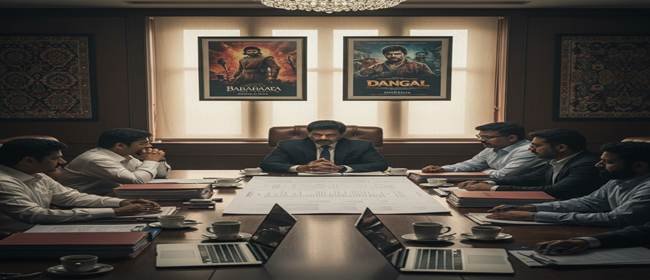
Key Elements:
- Rights Granted: The specific rights being sold (theatrical, OTT, TV, overseas, home video, etc.)
- Territory: The geographic regions covered by the deal.
- Duration: How long the distributor can exploit the film.
- Revenue Sharing: The split of income between producer and distributor.
- Minimum Guarantee (MG): An upfront fee paid by the distributor, often used to finance the film.
2. Types of Distribution Deals in India
- Theatrical Distribution: Rights to release the film in cinemas.
- Satellite Rights: Rights to broadcast films on TV channels.
- OTT/Digital Rights: Rights to stream films on platforms like Netflix, Amazon Prime, Disney+ Hotstar.
- Music Rights: Sale of soundtrack/music.
- International Distribution: Overseas release, including in countries with large Indian diasporas.
Example:
- “Dangal” (2016): Secured separate distribution deals for China, which contributed significantly to its box office.
3. The Process of Distribution in India
- Negotiation: Producers negotiate with distributors and sales agents, sometimes even before the film is completed.
- Contract Finalization: Legal teams draft and review contracts covering all rights and obligations.
- Release Strategy: Distributors plan release windows—festivals, theatrical, digital, TV, etc.
- Revenue Collection: The distributor collects revenue from exhibitors and remits the producer’s share as per the contract.
4. Indian Case Study: “Baahubali: The Beginning” (2015)
- Pan-India Release: “Baahubali” was released in multiple Indian languages and internationally.
- Distribution Contracts: The producers signed deals with different distributors for Telugu, Tamil, Hindi, and Malayalam markets. Karan Johar’s Dharma Productions distributed the Hindi version.
- Satellite & Digital Rights: Hotstar acquired digital rights; Star TV acquired satellite rights for a record sum.
- Revenue Model: The film’s revenue was maximized through a combination of minimum guarantee deals and revenue sharing.
Key Takeaway:
The success of Baahubali was built on well-structured contracts that ensured wide distribution, robust pre-release business (satellite, digital, and overseas rights), and transparent revenue sharing.
5. Sales Agents and International Markets
For Indian films aiming at overseas audiences, sales agents play a vital role. They represent the film at international markets, festivals, and negotiate with foreign distributors.
Example:
- “Lunchbox” (2013): International sales agent The Match Factory helped secure releases in over 30 countries, boosting the film’s global profile.
6. Challenges in Distribution Contracts
- Delayed Payments: Distributors sometimes delay payments or fail to report accurate box office numbers.
- Piracy: Impacts potential earnings, especially for smaller films.
- Market Fragmentation: India’s linguistic and regional diversity requires multiple deals.
7. Best Practices for Filmmakers
- Legal Review: Always have contracts reviewed by experienced entertainment lawyers.
- Transparent Accounting: Insist on regular, audited statements.
- Clear Rights Allocation: Specify exactly what’s being sold and what’s retained.
VI. FIAPF, SWA, FWICE: Roles and Impact
1. FIAPF (International Federation of Film Producers Associations)
Overview
- FIAPF is an international organization that represents producers’ interests and regulates international film festivals.
- It accredits festivals like Cannes, Berlin, and the International Film Festival of India (IFFI).
Indian Example:
- IFFI (Goa): Accredited by FIAPF, giving it global recognition and making it a key platform for Indian and international films.
Case Study:
- IFFI’s Growth Post-Accreditation: After gaining FIAPF accreditation, IFFI attracted higher-quality international entries, more buyers, and greater media attention, boosting the global profile of Indian cinema.
2. SWA (Screenwriters Association)
Overview
- SWA is India’s primary body for screenwriters and lyricists.
- It helps protect writers’ rights, arbitrate disputes, and set industry standards for contracts and credits.
Functions:
- Registration of Scripts: Protects original work from plagiarism.
- Contract Assistance: Offers model contracts and legal advice.
- Credit Disputes: Mediates conflicts over screenwriting and lyric credits.
- Workshops and Training: Hosts events for skills development.
Indian Example:
- SWA vs. Film Producer: In several cases, SWA has intervened when writers claimed their scripts were used without credit or payment. In 2019, multiple writers credited SWA for settling disputes regarding films like “Luka Chuppi” and “Manikarnika.”
Case Study:
- “Manikarnika: The Queen of Jhansi” (2019): The film faced a controversy over writing credits. SWA mediated between the writers and producers, resulting in fair credit allocation.
3. FWICE (Federation of Western India Cine Employees)
Overview
- FWICE is a union representing technicians, crew, and other workers in the Mumbai film industry.
- It covers a wide range of crafts—camera, sound, makeup, set workers, etc.
Functions:
- Wages and Working Conditions: Negotiates minimum wages, working hours, and safety norms.
- Dispute Resolution: Handles labor disputes and strikes.
- Welfare Programs: Offers health and accident insurance, financial aid, etc.
Indian Example:
- FWICE Strike (2017): FWICE called a strike demanding better wages and working conditions. Major productions came to a halt until producers agreed to revised terms.
Case Study:
- FWICE vs. Producers Guild Strike (2018):
- Background: FWICE demanded higher minimum wages and improved safety for crew.
- Impact: Over 20,000 workers participated. Shooting of major projects like “Housefull 4” and TV serials was paused.
- Resolution: After intense negotiations, producers agreed to updated wage structures and safety protocols.
4. Importance of These Organizations
- Ensuring Fairness: They protect the rights and welfare of creators and workers.
- Industry Standards: They help set ethical, legal, and safety standards.
- Dispute Resolution: They offer neutral platforms for resolving industry conflicts.
5. The Role in Modern Indian Filmmaking
As the Indian film industry globalizes and diversifies (with the growth of OTT platforms, indie cinema, and international co-productions), the roles of FIAPF, SWA, and FWICE have become more significant.
Examples:
- SWA registration is now a requirement for many script submissions to production houses and studios.
- FWICE has collaborated with OTT platforms like Netflix and Amazon Prime to set new standards for crew welfare and safety.
- FIAPF accreditation has helped Indian films gain more visibility at international festivals.
Conclusion
Distribution and sales contracts are the backbone of a film’s commercial success in India. Well-negotiated contracts ensure that a film reaches its intended audience and that profits are shared fairly among stakeholders. Indian blockbusters like “Baahubali” and “Dangal” exemplify the importance of strategic distribution deals, not just domestically but also internationally.
Meanwhile, organizations like FIAPF, SWA, and FWICE play a pivotal role in safeguarding the interests of Indian filmmakers, writers, and technicians. Through advocacy, dispute resolution, and the setting of industry standards, they help make the Indian film industry more professional, fair, and globally competitive.
Indian Film Industry: The Road Ahead
As the industry evolves, especially with the rise of digital platforms and international collaborations, understanding the legal and organizational landscape becomes even more crucial for filmmakers. Whether it’s drafting a robust sales contract, registering a script, or ensuring fair working conditions, knowledge of these systems is essential for anyone aspiring to build a lasting career in Indian cinema.